



































































































































































































































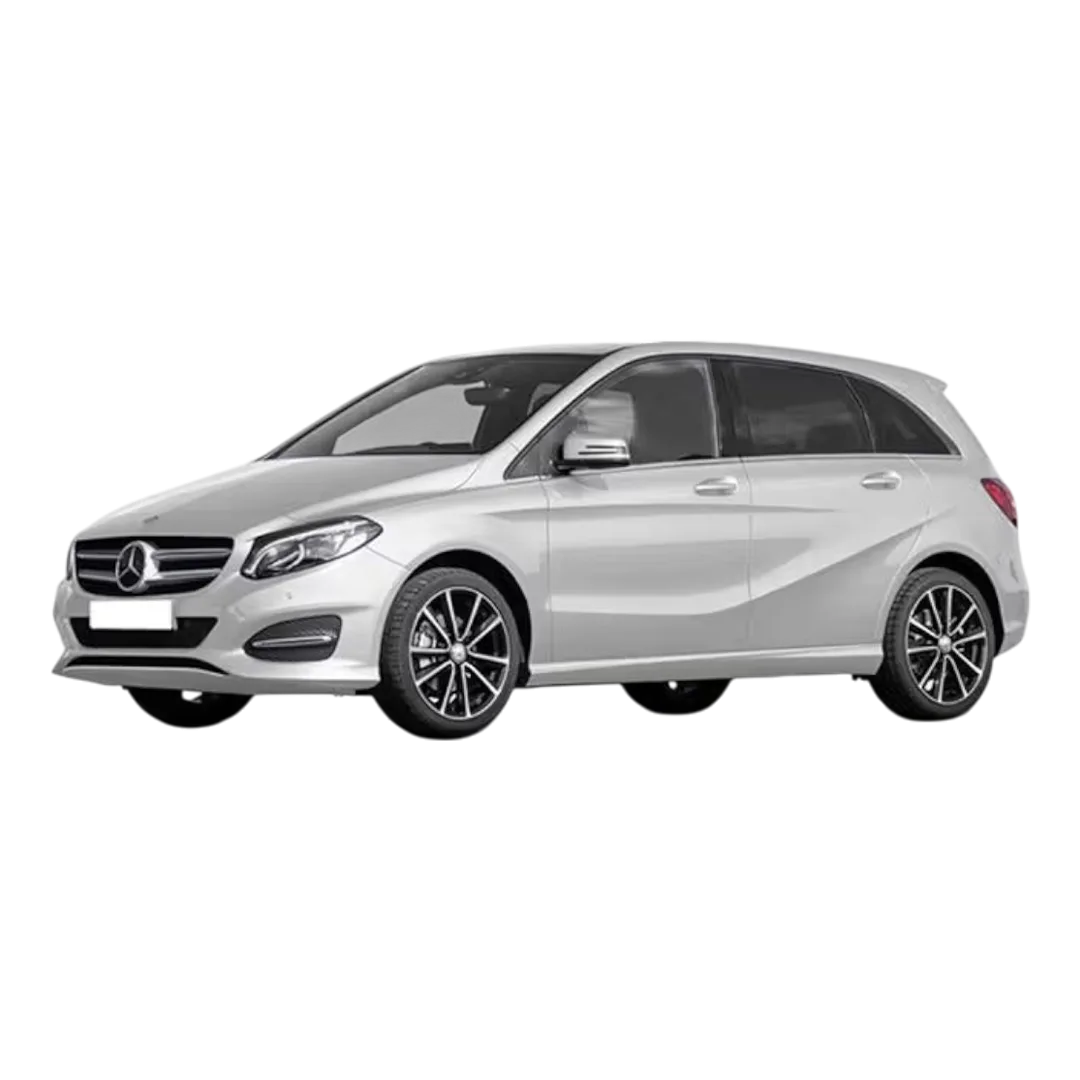


































Imagine driving on a busy highway where your car instantly warns you about sudden braking, an approaching vehicle in your blind spot, or a possible collision at the next intersection-even before you notice the danger. This is no longer a futuristic concept. Vehicle-to-Vehicle (V2V) Communication is emerging as one of the most significant innovations in Road Safety Technology India, with the potential to redefine how people travel across the country.
The MoRTH V2V Communication draft proposal introduces a vision for connected mobility by proposing the V2V Communication mandate in India 2028. If implemented, newly manufactured vehicles will be equipped with intelligent communication systems capable of exchanging real-time information such as speed, braking status, direction, and vehicle location. The goal is to reduce road accidents, improve traffic efficiency, and save thousands of lives every year.
In this guide, you'll learn What is Vehicle-to-Vehicle (V2V) Communication?, How does V2V Communication work?, the proposed MoRTH V2V Mandate, its benefits, implementation challenges, and what Indian drivers can expect in the coming years. At Creckk, we regularly share the latest automotive technology updates to help drivers stay informed about the future of connected mobility.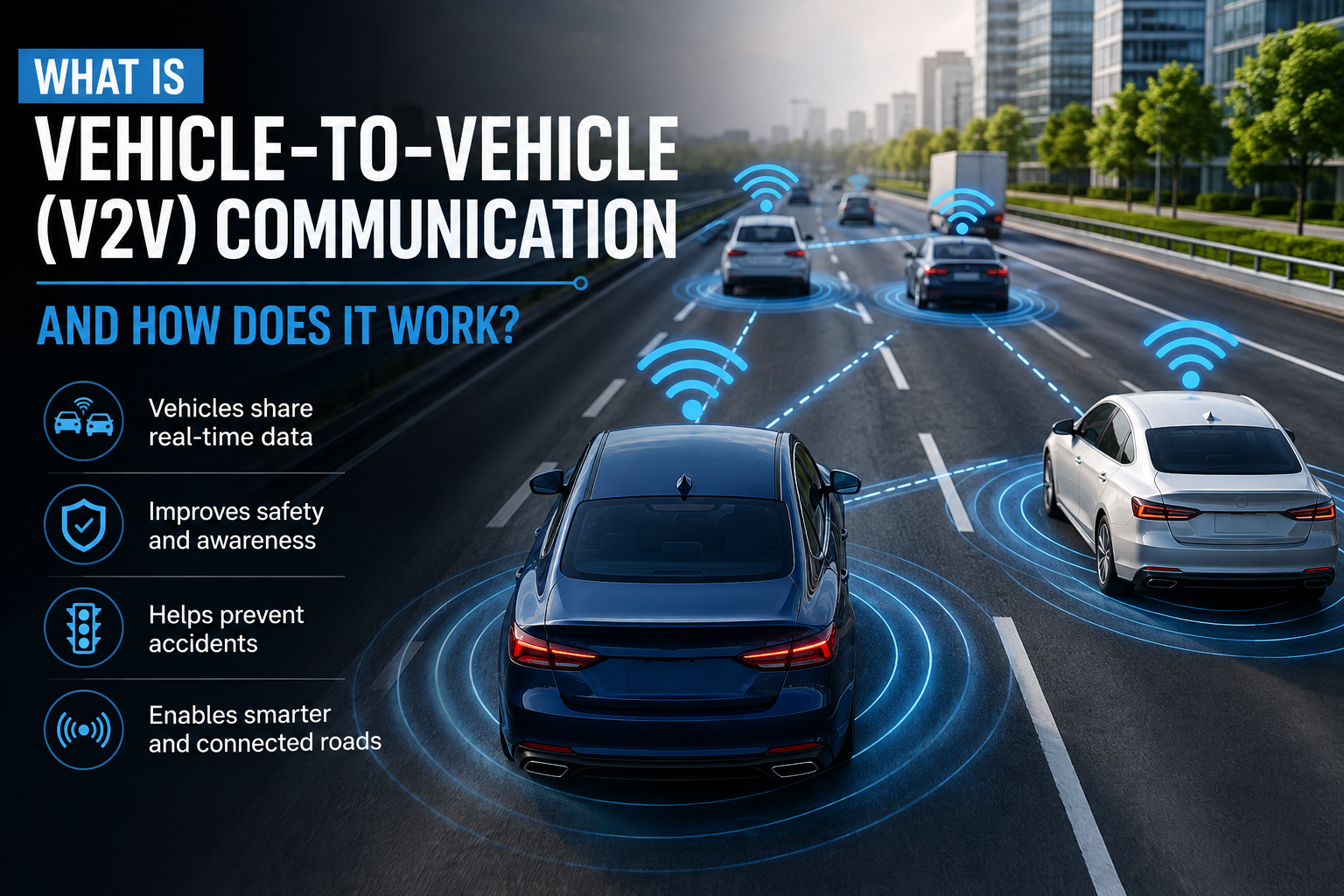
What Is Vehicle-to-Vehicle (V2V) Communication and How Does It Work?
Modern vehicles are becoming smarter every year, and Vehicle-to-Vehicle Communication is one of the biggest milestones in this transformation. Simply put, What is Vehicle-to-Vehicle (V2V) Communication? It is a wireless technology that enables vehicles to exchange important driving information with one another in real time without relying on the internet or a mobile network.
So, How does V2V Communication work? Every compatible vehicle continuously broadcasts safety-related data such as its speed, GPS location, direction of travel, braking status, acceleration, steering movements, and lane position. Nearby vehicles receive this information within milliseconds and process it using onboard computers. If the system predicts a possible collision or unsafe driving situation, it immediately alerts the driver or activates advanced safety systems like Automatic Emergency Braking (AEB) in supported vehicles.
Unlike GPS navigation systems, V2V Communication focuses on direct vehicle interaction. Technologies such as Dedicated Short-Range Communication (DSRC) and Cellular Vehicle-to-Everything (C-V2X) enable secure, low-latency communication between connected vehicles.
As part of the proposed MoRTH V2V Mandate, this connected ecosystem could become a standard feature in future vehicles sold across India. The MoRTH V2V Communication draft proposal aims to strengthen Road Safety Technology India by enabling vehicles to communicate with one another before accidents occur.
At Creckk, we believe connected vehicle technologies like V2V will soon become as essential as airbags and ABS, making Indian roads significantly safer for every driver.
How V2V Communication Works
| Step | Process | Benefit |
|---|---|---|
| 1 | Vehicle sensors collect speed, braking, GPS location, direction and movement data. | Provides accurate real-time vehicle information. |
| 2 | Wireless communication modules broadcast safety information to nearby vehicles. | Enables instant data sharing. |
| 3 | Nearby connected vehicles receive and analyze the transmitted data. | Improves situational awareness. |
| 4 | The onboard computer predicts possible collision risks. | Provides early hazard detection. |
| 5 | The driver receives dashboard, audio or visual alerts. | Allows quicker reaction time. |
| 6 | Advanced vehicles can activate emergency braking or driver assistance systems. | Reduces accident severity. |
Key Information Shared Through V2V Communication
| Information Shared | Purpose |
|---|---|
| Vehicle Speed | Detect sudden speed changes. |
| GPS Location | Track nearby vehicle positions. |
| Direction of Travel | Prevent wrong-way and crossing collisions. |
| Braking Status | Warn following vehicles immediately. |
| Acceleration | Predict unsafe driving situations. |
| Steering Angle | Improve lane-change safety. |
| Lane Position | Assist in maintaining safe vehicle spacing. |
| Hazard Alerts | Notify nearby vehicles about accidents or road dangers. |
MoRTH's 2028 V2V Mandate: What the New Draft Proposal Means
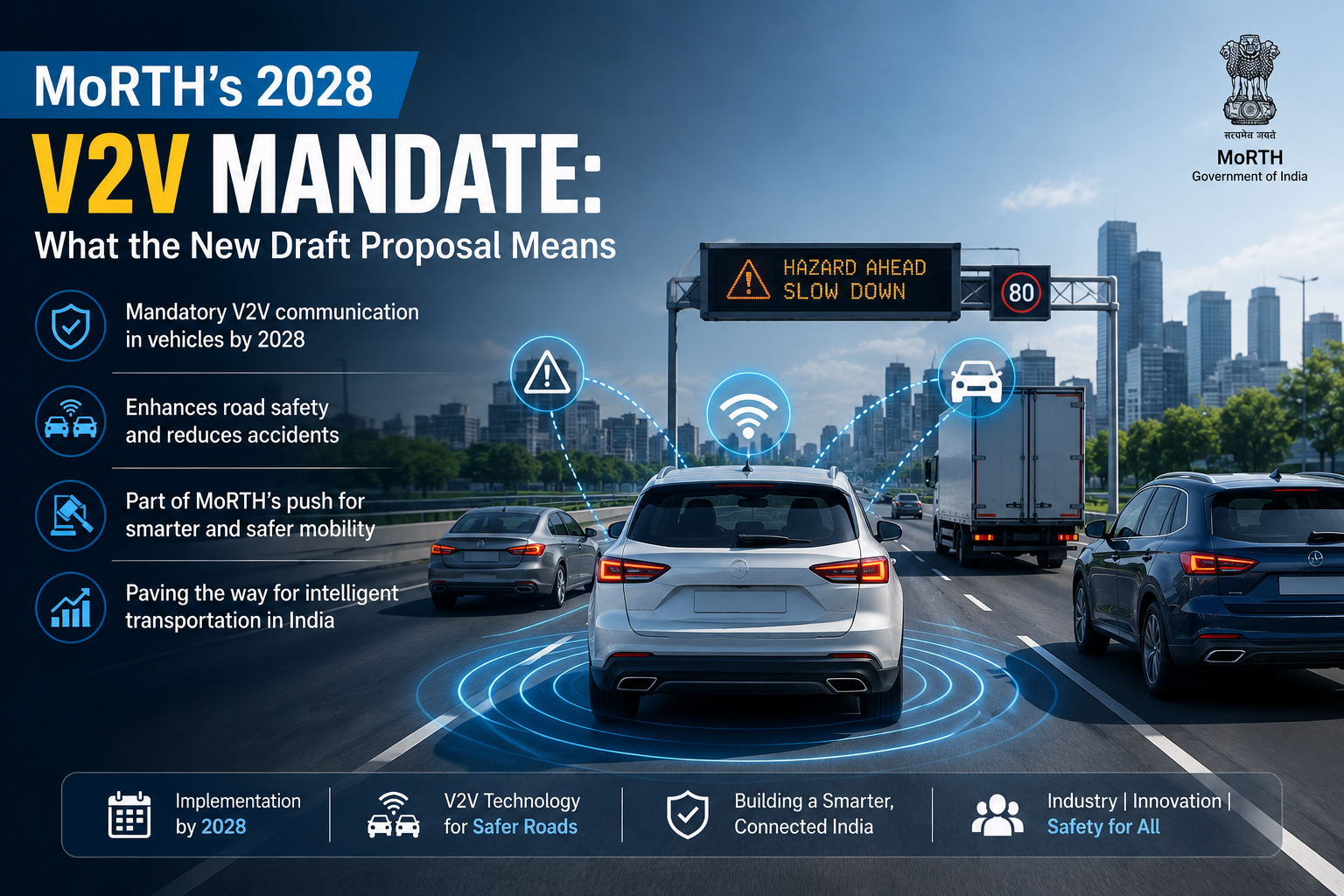
India is taking a significant step toward safer and smarter transportation with the proposed MoRTH V2V Communication draft proposal. Introduced by the Ministry of Road Transport and Highways (MoRTH), the proposal outlines a roadmap for equipping new vehicles with Vehicle-to-Vehicle (V2V) Communication technology. If approved, the V2V Communication mandate in India 2028 will make connected vehicle technology an important part of India's future mobility ecosystem.
The primary objective of the MoRTH V2V Mandate is to reduce road accidents by allowing vehicles to exchange real-time safety information. Through Vehicle-to-Vehicle Communication, connected cars can instantly share data such as speed, braking status, direction, lane position, and GPS location. This continuous exchange enables drivers to receive early warnings about potential hazards, helping them react before dangerous situations develop.
The proposed implementation is expected to begin with newly manufactured passenger vehicles and selected commercial vehicles. A phased rollout would give automobile manufacturers sufficient time to integrate communication modules, onboard processing systems, and cybersecurity measures while ensuring compatibility across different vehicle brands.
Beyond improving road safety, the proposal supports India's vision of intelligent transportation systems, connected highways, and smart mobility. As Road Safety Technology India continues to evolve, connected vehicles will play an increasingly important role in reducing congestion, improving traffic management, and supporting future autonomous driving technologies.
At Creckk, we believe understanding What is Vehicle-to-Vehicle (V2V) Communication? and How does V2V Communication work? will help drivers prepare for the next generation of connected vehicles. The MoRTH V2V Communication draft proposal represents a major milestone in making Indian roads safer through innovation and technology.
Proposed Implementation Timeline
| Timeline | Expected Development | Impact |
|---|---|---|
| Draft Proposal | MoRTH introduces the V2V Communication framework. | Industry consultation begins. |
| Technical Review | Automobile manufacturers and technology providers submit recommendations. | National communication standards are refined. |
| Pilot Testing | Selected V2V-enabled vehicles undergo testing. | Performance and interoperability are evaluated. |
| Manufacturer Preparation | Vehicle companies integrate V2V hardware and software. | Production readiness improves. |
| 2028 (Proposed) | Implementation of the V2V Communication mandate in India 2028 for applicable new vehicles. | Connected mobility begins expanding across India. |
Objectives of the MoRTH V2V Mandate
| Objective | Expected Benefit |
|---|---|
| Reduce Road Accidents | Earlier hazard detection and collision prevention. |
| Improve Driver Safety | Real-time alerts for nearby vehicles and hazards. |
| Standardize Vehicle Communication | Ensures compatibility across different manufacturers. |
| Promote Smart Mobility | Supports connected transportation systems. |
| Enhance Traffic Efficiency | Reduces congestion and improves traffic flow. |
| Support Future Autonomous Vehicles | Builds the foundation for advanced driving technologies. |
Key Highlights of the Draft Proposal
- Introduced by the Ministry of Road Transport and Highways (MoRTH).
- Focuses on improving Road Safety Technology India through connected vehicle systems.
- Encourages adoption of Vehicle-to-Vehicle (V2V) Communication in future vehicles.
- Supports real-time communication between nearby connected vehicles.
- Expected to reduce collisions, improve traffic management, and strengthen emergency response.
- Creates a technological foundation for future intelligent transportation systems.
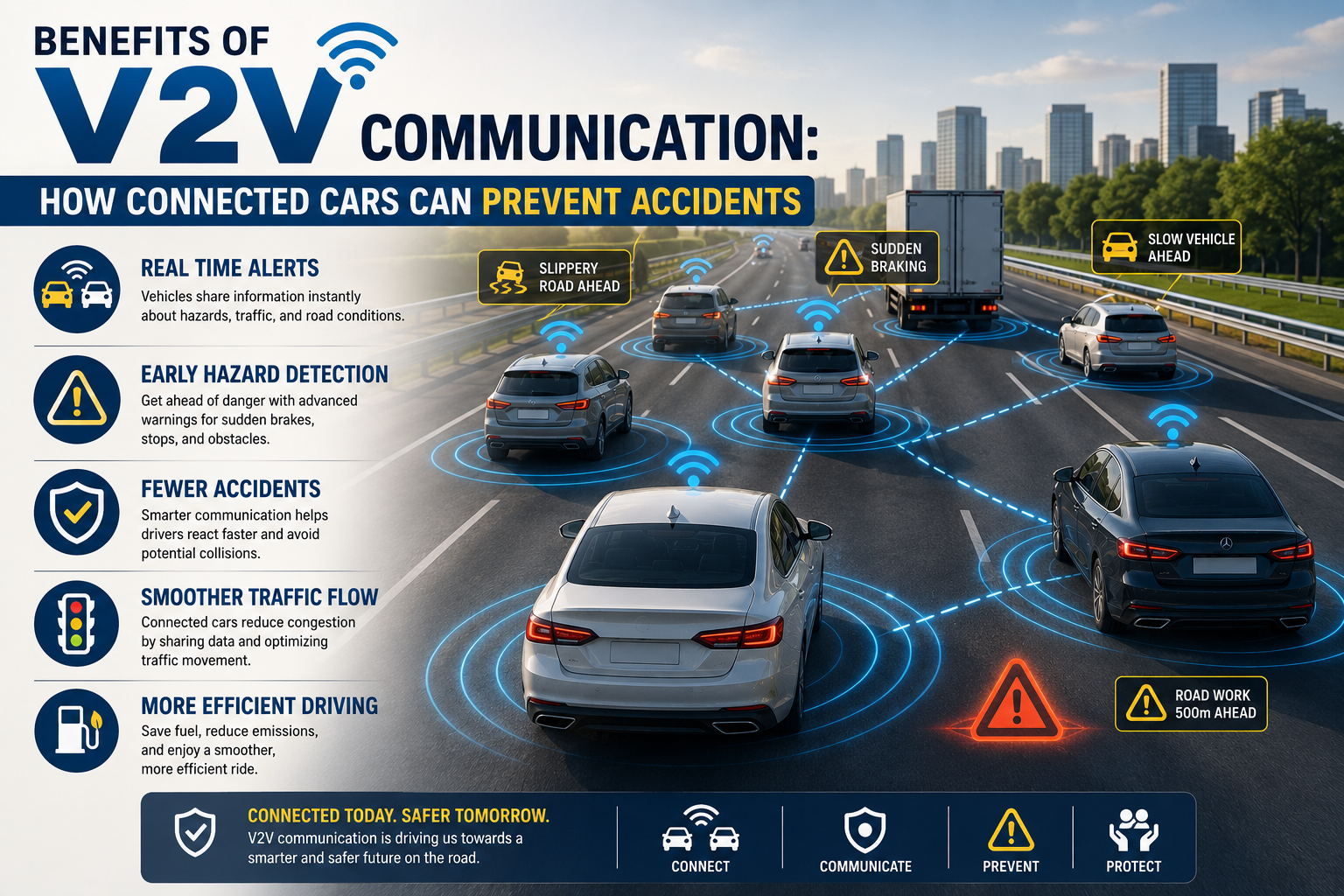
The biggest advantage of Vehicle-to-Vehicle (V2V) Communication is its ability to help prevent accidents before they happen. Unlike conventional safety systems that depend on a driver's visibility or reaction time, Vehicle-to-Vehicle Communication allows nearby vehicles to exchange critical information in real time. This gives drivers valuable extra seconds to respond to hazards, making everyday driving safer and more efficient.
One of the most valuable applications is forward collision warning. If a vehicle ahead suddenly brakes, nearby connected vehicles instantly receive an alert-even before the driver notices the brake lights. This early warning can significantly reduce rear-end collisions. Similarly, blind-spot alerts become more accurate because the system detects vehicles hidden from mirrors, helping drivers change lanes with greater confidence.
Another major benefit is improved intersection safety. Many accidents occur because drivers cannot see vehicles approaching from another direction. V2V technology shares information about vehicle speed, location, and direction, allowing connected vehicles to warn drivers before a collision becomes likely.
The proposed MoRTH V2V Mandate also aims to improve traffic efficiency. When vehicles exchange real-time traffic information, unnecessary braking and sudden lane changes can be reduced, leading to smoother traffic flow and lower fuel consumption. The MoRTH V2V Communication draft proposal positions connected vehicle technology as a major advancement in Road Safety Technology India.
Many drivers still ask, What is Vehicle-to-Vehicle (V2V) Communication? and How does V2V Communication work? The answer lies in continuous communication between nearby vehicles, allowing them to exchange information about speed, braking, location, and direction within milliseconds. These alerts provide drivers with more time to react, reducing accident risks in both city traffic and on highways.
At Creckk, we believe technologies like V2V will become as essential as airbags and ABS in future vehicles. As the proposed V2V Communication mandate in India 2028 moves closer to implementation, connected vehicle safety is expected to become a standard feature across India's automotive industry.
Major Benefits of V2V Communication
| Feature | How It Works | Driver Benefit |
|---|---|---|
| Forward Collision Warning | Detects sudden braking by vehicles ahead. | Reduces rear-end collisions. |
| Blind Spot Alerts | Detects vehicles hidden from the driver's view. | Safer lane changes. |
| Intersection Collision Warning | Monitors cross traffic at intersections. | Prevents side-impact accidents. |
| Emergency Brake Warning | Shares emergency braking information instantly. | Faster driver response. |
| Lane Change Assistance | Warns about nearby vehicles during lane changes. | Improves highway safety. |
| Hazard Notifications | Alerts nearby vehicles about accidents or road hazards. | Increases driver awareness. |
| Traffic Flow Optimization | Shares traffic movement information. | Reduces congestion. |
| Emergency Vehicle Alerts | Detects approaching ambulances and emergency vehicles. | Faster emergency response. |
How V2V Improves Road Safety
| Safety Area | Without V2V | With V2V Communication |
|---|---|---|
| Driver Awareness | Depends on mirrors and visibility. | Receives real-time alerts from nearby vehicles. |
| Reaction Time | Driver reacts after noticing danger. | Early warnings improve response time. |
| Collision Prevention | Limited to driver observation. | Predictive hazard detection. |
| Blind Spot Monitoring | Uses mirrors and cameras. | Vehicle communication adds another safety layer. |
| Traffic Management | Manual driving decisions. | Smarter traffic coordination. |
| Emergency Situations | Drivers become aware after reaching the scene. | Hazard information shared instantly. |
Key Benefits at a Glance
- Helps prevent collisions before they occur.
- Provides real-time alerts about nearby vehicles.
- Improves blind-spot awareness and lane-change safety.
- Enhances intersection safety through predictive warnings.
- Supports smoother traffic flow and reduced congestion.
- Improves emergency response by sharing hazard information.
- Strengthens the goals of the MoRTH V2V Mandate.
- Supports the future of Road Safety Technology India.
- Creates a safer driving environment for millions of Indian road users.
- Forms the foundation for connected and autonomous vehicles.
Challenges, Future Scope, and What V2V Means for Indian Drivers
Although Vehicle-to-Vehicle (V2V) Communication promises to transform road safety in India, its nationwide implementation comes with several challenges. The success of the proposed MoRTH V2V Communication draft proposal will depend on collaboration between the government, automobile manufacturers, technology providers, telecom companies, and infrastructure agencies. Building a connected transportation ecosystem requires more than installing communication modules in vehicles; it also requires common standards, secure communication networks, and public awareness.
One of the biggest challenges is interoperability. Every manufacturer must adopt standardized communication protocols so that vehicles from different brands can exchange information seamlessly. Cybersecurity is another important consideration. Since connected vehicles continuously transmit data, manufacturers must implement advanced encryption, secure authentication, and regular software updates to protect against cyber threats.
Cost is also an important factor. Initially, V2V technology may increase manufacturing costs, particularly in entry-level vehicles. However, as production volumes grow and technology becomes more common, prices are expected to decrease. Public awareness is equally important because many drivers still do not fully understand What is Vehicle-to-Vehicle (V2V) Communication? or How does V2V Communication work?.
Despite these challenges, the future remains highly promising. The proposed MoRTH V2V Mandate aligns with India's long-term vision for connected mobility, intelligent transportation systems, smart cities, and safer highways. Combined with Advanced Driver Assistance Systems (ADAS), Vehicle-to-Infrastructure (V2I) technology, and future autonomous vehicles, V2V communication will become a core pillar of Road Safety Technology India.
At Creckk, we believe connected vehicle technologies will redefine how Indians drive over the next decade. The proposed V2V Communication mandate in India 2028 is more than a regulatory initiative-it is the beginning of a smarter, safer, and more connected driving experience.
Implementation Challenges
| Challenge | Impact | Possible Solution |
|---|---|---|
| Standardization | Different manufacturers may use different communication systems. | National V2V standards and certification. |
| Cybersecurity | Risk of hacking and unauthorized access. | Encryption, authentication, and secure software updates. |
| Privacy | Protection of driver and vehicle information. | Strict data privacy regulations. |
| Infrastructure | Need for connected transportation systems. | Investment in smart roads and intelligent traffic systems. |
| Cost | Higher manufacturing costs during early adoption. | Economies of scale and technological advancements. |
| Public Awareness | Limited understanding of V2V technology. | Driver education and awareness campaigns. |
Future Scope of V2V Communication in India
| Future Development | Expected Benefit |
|---|---|
| Connected Smart Cities | Safer and more efficient urban transportation. |
| ADAS Integration | Enhanced driver assistance and accident prevention. |
| Vehicle-to-Infrastructure (V2I) | Smarter traffic signals and improved traffic management. |
| Autonomous Vehicles | Foundation for self-driving technology. |
| Emergency Response Systems | Faster accident detection and emergency services. |
| AI-Based Traffic Management | Reduced congestion and optimized traffic flow. |
Conclusion
The future of transportation is becoming increasingly connected, and Vehicle-to-Vehicle (V2V) Communication represents one of the most significant advancements in automotive safety. By allowing vehicles to exchange real-time information such as speed, braking, location, and direction, V2V technology helps drivers identify potential hazards before they become accidents.
The proposed MoRTH V2V Communication draft proposal demonstrates India's commitment to strengthening Road Safety Technology India. If implemented successfully, the V2V Communication mandate in India 2028 will improve road safety, reduce traffic congestion, and prepare the country for the next generation of connected and intelligent vehicles.
As connected mobility continues to evolve, understanding What is Vehicle-to-Vehicle (V2V) Communication? and How does V2V Communication work? will become increasingly important for every driver. While implementation challenges remain, the long-term benefits of safer roads, smarter traffic management, and reduced accident rates make this technology an important milestone in India's automotive journey.
At Creckk, we remain committed to bringing readers the latest updates on automotive technology, government regulations, and innovative vehicle solutions. Staying informed today will help drivers make smarter decisions tomorrow.
Frequently Asked Questions (FAQs)
1. What is Vehicle-to-Vehicle (V2V) Communication?
It is a wireless technology that allows vehicles to exchange real-time safety information such as speed, location, braking, and direction.
2. How does V2V Communication work?
Vehicles use dedicated wireless communication technologies to share information directly with nearby connected vehicles in real time.
3. What is the MoRTH V2V Mandate?
It is the proposed government initiative to introduce V2V communication systems in newly manufactured vehicles across India.
4. When will V2V Communication become mandatory in India?
The current draft proposal targets implementation beginning in 2028, subject to government approval.
5. What information is shared through V2V Communication?
Speed, GPS location, braking status, steering movement, acceleration, direction, and hazard alerts.
6. Does V2V require an internet connection?
No. Most V2V systems communicate directly using dedicated wireless technologies.
7. Can V2V Communication reduce accidents?
Yes. Early safety alerts provide drivers with additional reaction time, helping prevent many common accidents.
8. Is V2V technology secure?
Modern V2V systems use encryption, authentication, and secure software updates to improve cybersecurity.
9. Will existing vehicles support V2V?
Most older vehicles do not include built-in V2V hardware, although aftermarket solutions may become available in the future.
10. Why should drivers follow Creckk?
Creckk shares the latest automotive technology updates, government regulations, buying guides, and vehicle accessory information to help drivers stay informed.