


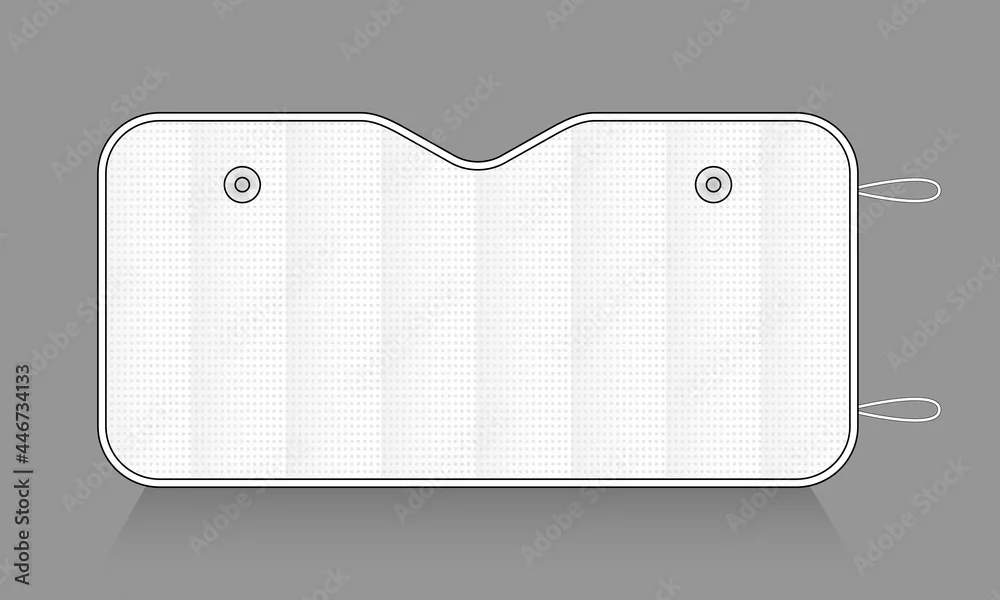


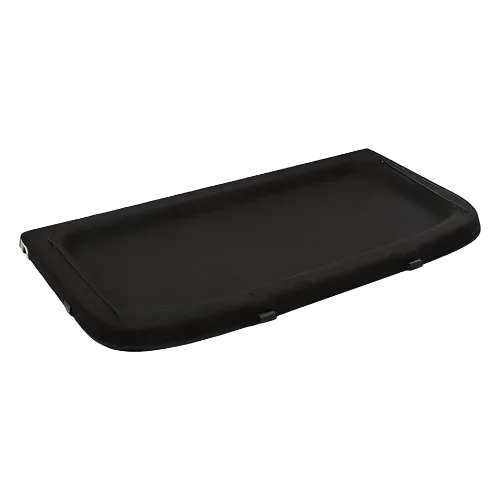






































































































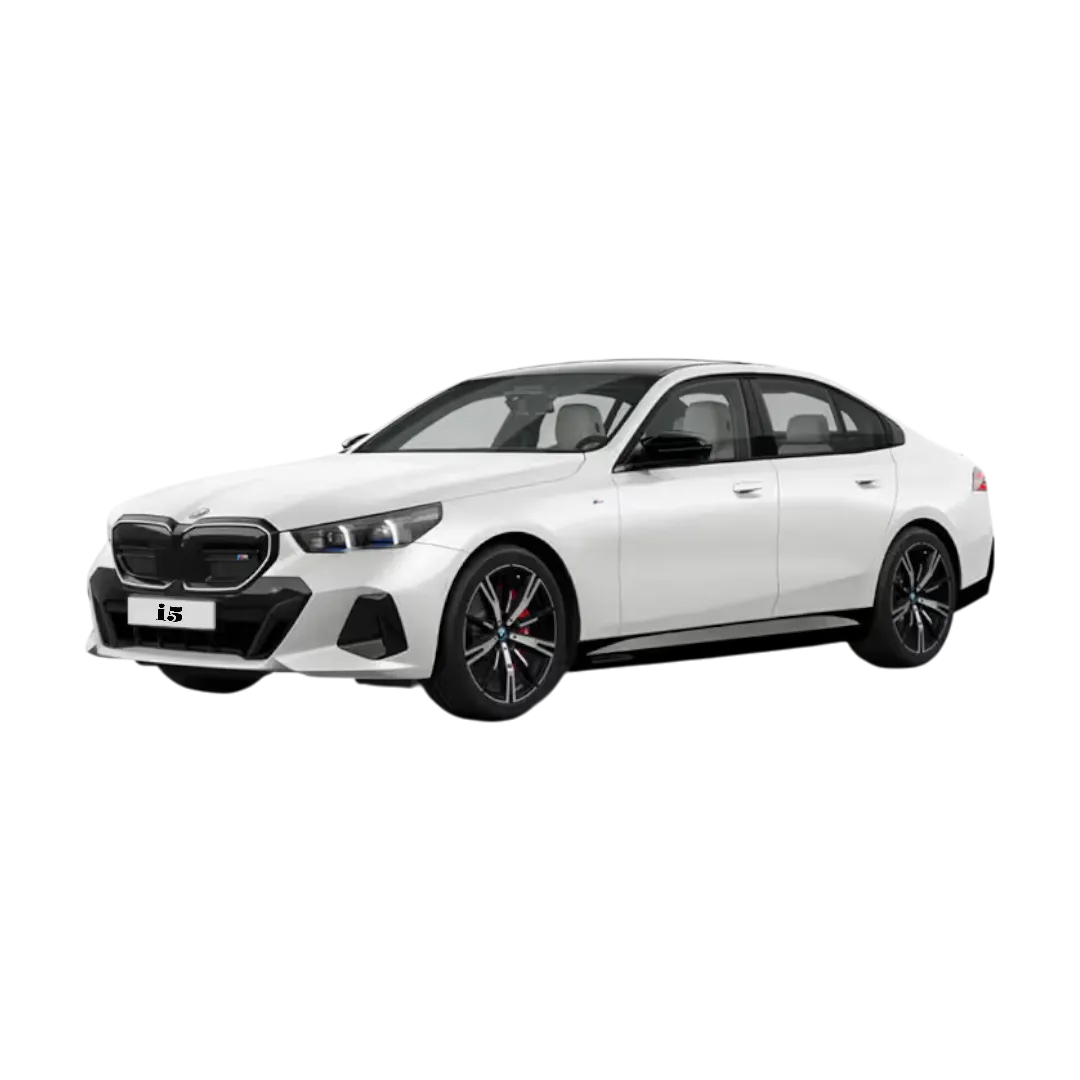

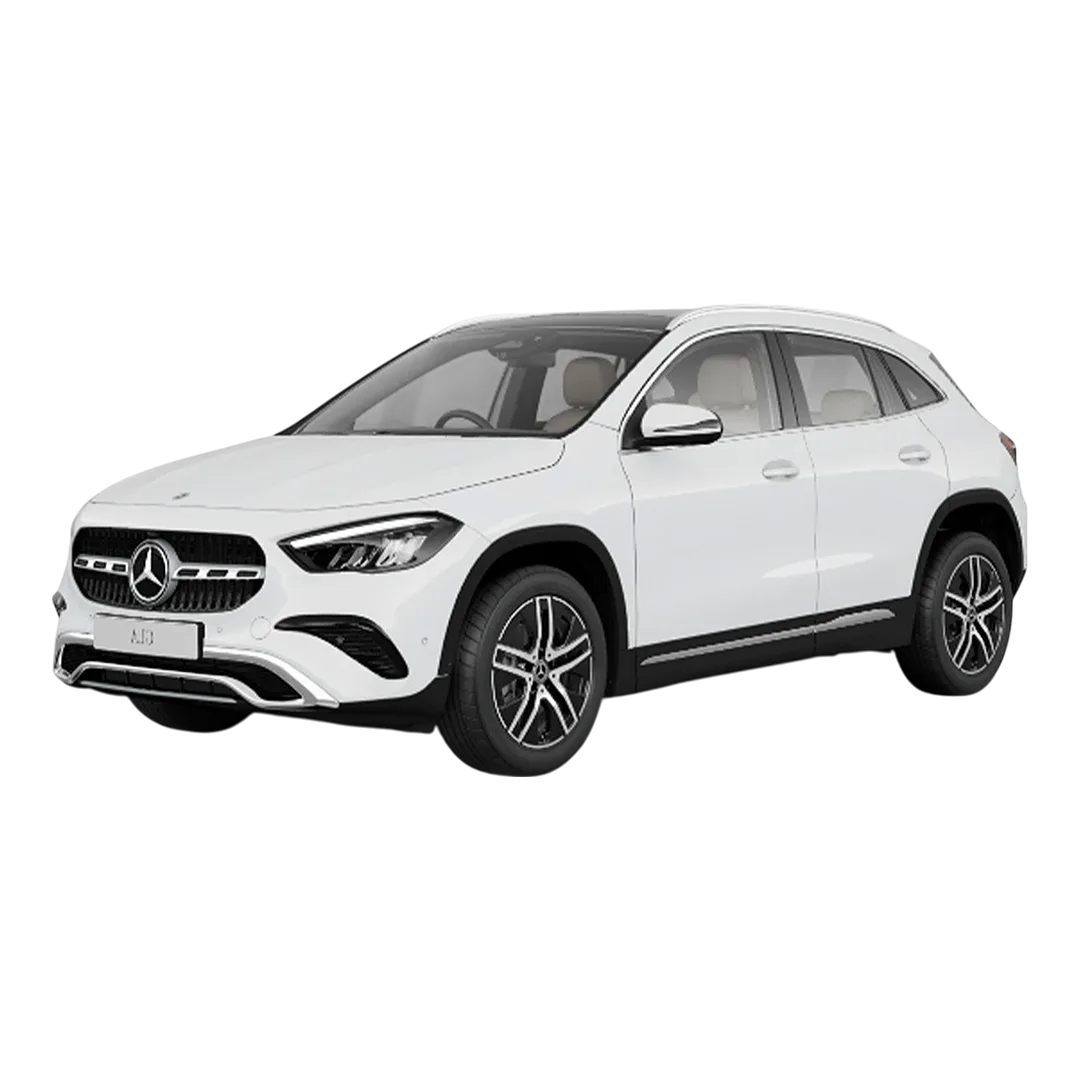
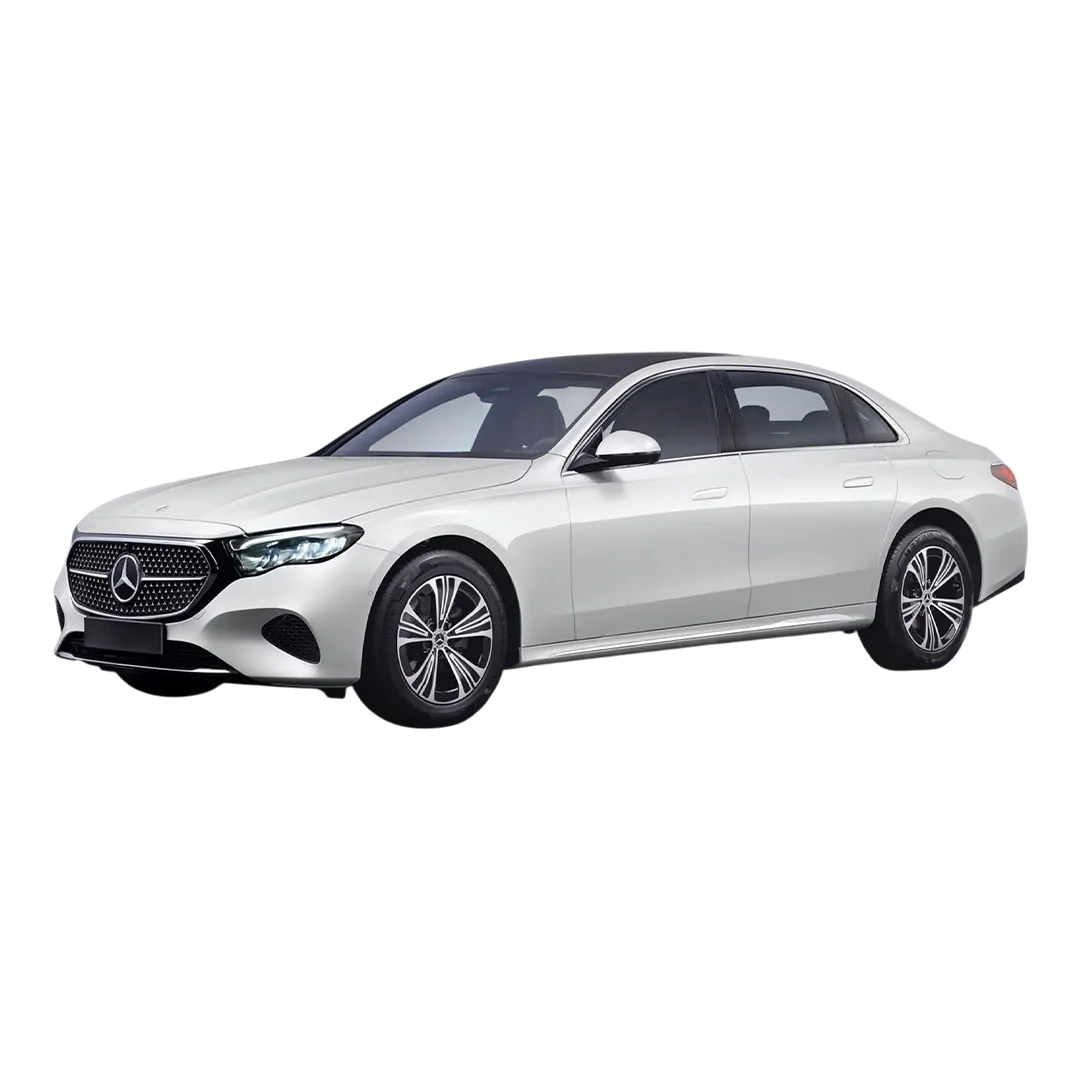









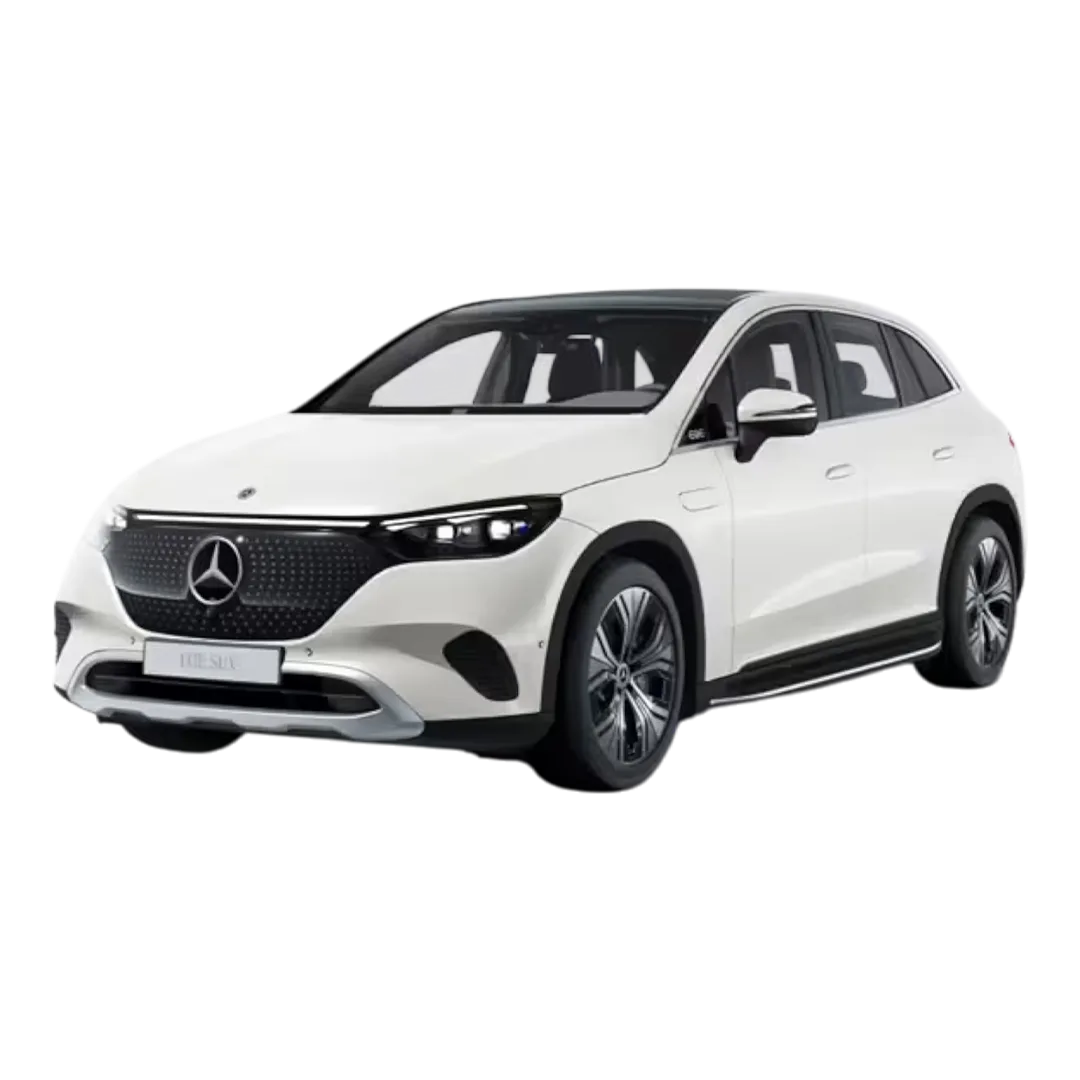
































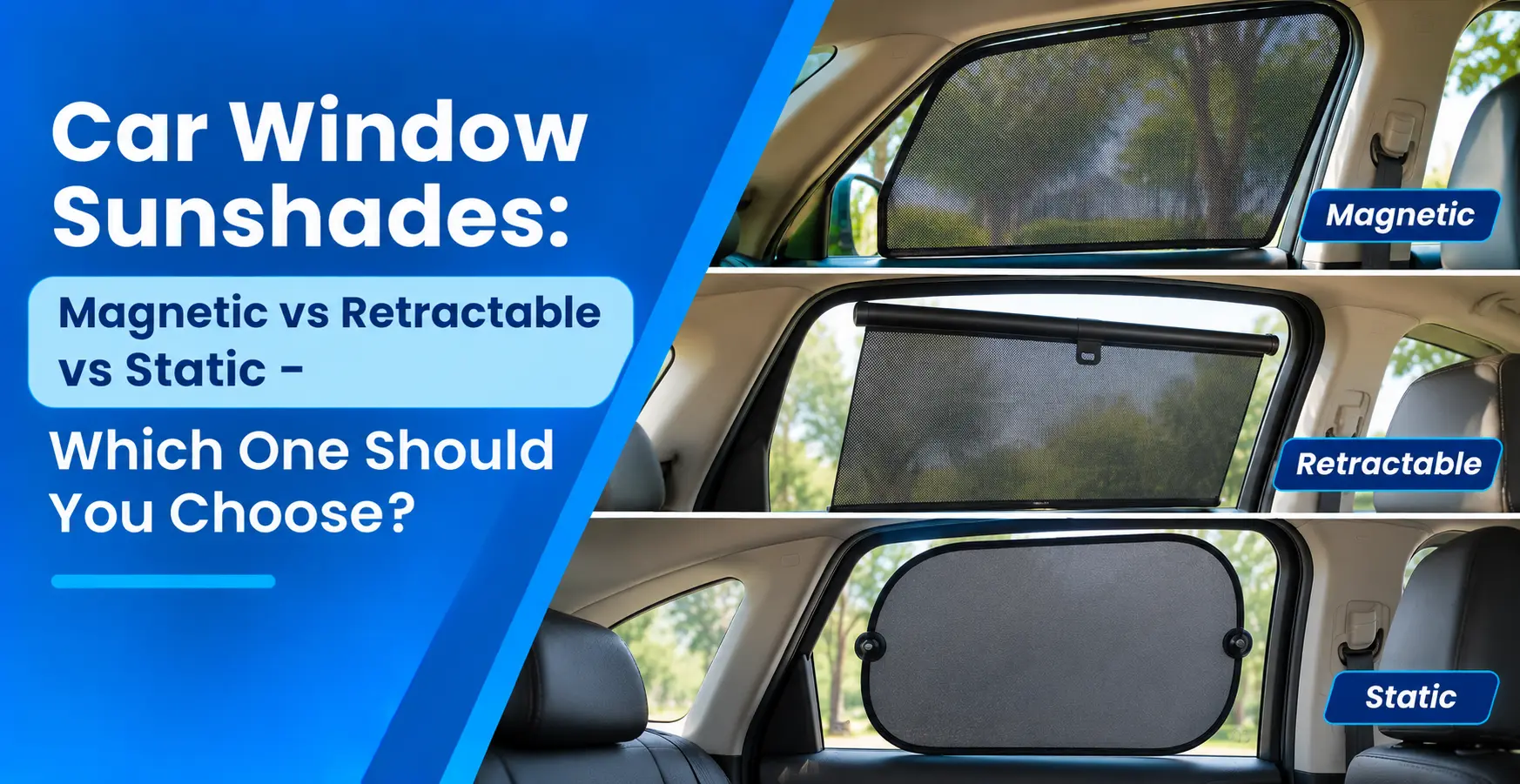
A car window sunshade is an accessory designed to reduce direct sunlight entering through a vehicle's windows. Depending on its material and construction, it may also help reduce glare and provide shade for passengers. However, not all car sun shades work in the same way. Magnetic, retractable and static sunshades use different attachment methods and offer different levels of convenience.
Magnetic shades are designed for removable fitting, retractable shades provide adjustable coverage, and static shades use a cling surface to attach to compatible glass. Each type has its own features, benefits and drawbacks, making it important to understand the differences before purchasing.
In this guide, we explain how these three types of car window shades work, compare their practical advantages and limitations, and discuss important Indian vehicle-glazing regulations. This will help you make a more informed decision when exploring Creckk car accessories.

1. What Are Car Window Sunshades and Why Do You Need Them?
Car window sunshades are accessories designed to reduce direct sunlight entering a vehicle through its windows. They are commonly available for side windows and rear windows, depending on the product's design and dimensions.
These accessories are made using different materials, including mesh, fabric and reflective surfaces. Some allow passengers to see outside through the material, while others provide more extensive shade. Their performance depends on material quality, coverage and construction.
Why Do Car Owners Use Window Sunshades?
- Reduced direct sunlight: Helps limit sunlight entering through covered windows.
- Improved passenger comfort: Provides shade for passengers sitting near sunny windows.
- Reduced glare: Certain designs can reduce direct sunlight falling on passengers.
- Interior protection: Some materials help reduce direct exposure of seats and other interior surfaces to sunlight.
- Different installation options: Magnetic, retractable and static designs offer different attachment methods.
However, a sunshade does not guarantee a specific reduction in cabin temperature. The temperature inside a vehicle also depends on outside weather, parking conditions, ventilation, glass area and vehicle colour.
Creckk Tip: Before purchasing a car sunshade for side windows, measure the glass area and compare it with the product dimensions. A poorly fitted shade
may leave gaps and provide limited coverage.
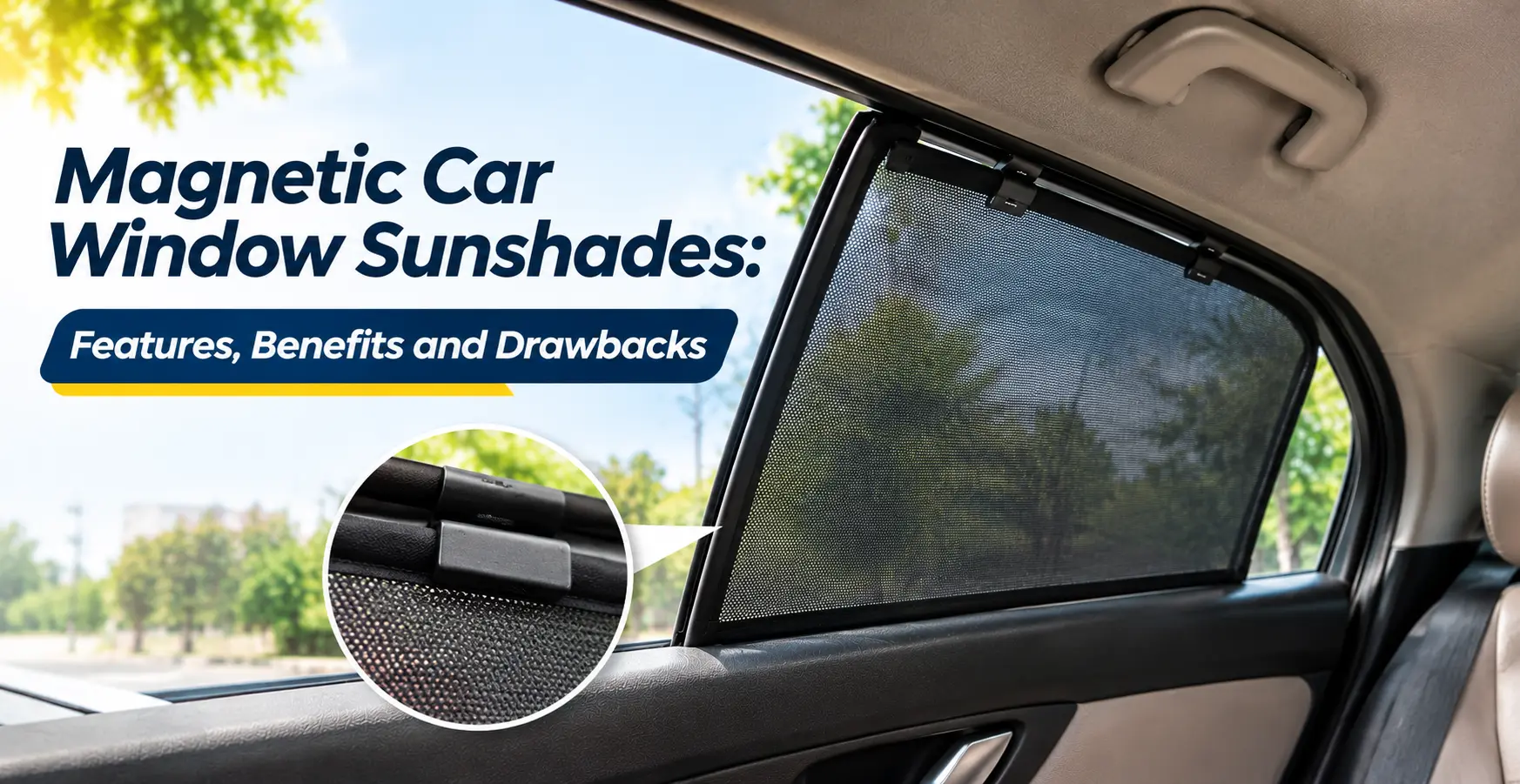
2. Magnetic Car Window Sunshades: Features, Benefits and Drawbacks
Magnetic car window sunshades use magnets to attach to suitable metal surfaces around a vehicle's window frame. They generally feature mesh or fabric material that helps reduce direct sunlight entering the cabin.
These shades are available in different shapes and sizes. Some are designed specifically for particular vehicle models, while others come in more general sizes. Their removable construction makes them convenient for users who prefer taking the shade off when it is not required.
Features
- Magnetic attachment: Uses magnets to attach to compatible metal surfaces.
- Mesh or fabric construction: Available in materials that provide different levels of shade and visibility.
- Vehicle-specific designs: Some products are shaped for particular car models.
- Removable construction: Can generally be detached and stored when not in use.
Benefits
- Easy installation and removal: Magnetic attachment can make fitting and removing the product convenient.
- Convenient storage: Removable shades can be stored when they are not needed.
- Passenger comfort: Helps reduce direct sunlight entering through covered windows.
- Reusable design: Can be used repeatedly when maintained properly.
Drawbacks
- Vehicle compatibility: Some window frames may not provide suitable magnetic contact points.
- Fitment issues: Incorrect sizing can leave gaps around the window.
- Limited attachment options: Magnetic designs may not work with every vehicle's construction.
- Legal considerations: Magnetic attachment does not automatically make a shade compliant with Indian vehicle-glazing regulations.
Creckk Tip: Before purchasing magnetic car window shades, check your vehicle's window dimensions and confirm whether the frame supports magnetic attachment.
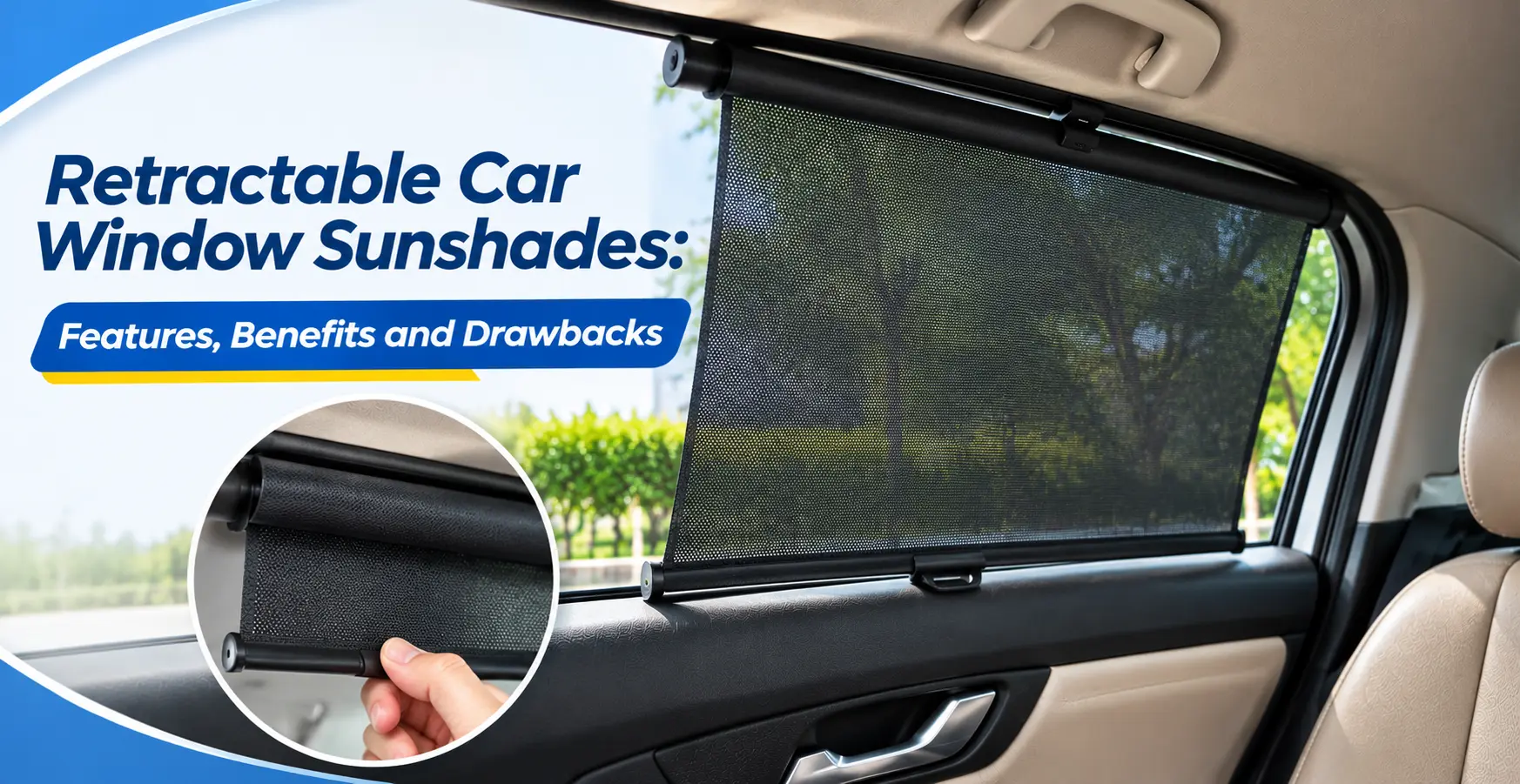
3. Retractable Car Window Sunshades: Features, Benefits and Drawbacks
Retractable car window sunshades use a roller-based mechanism that allows the shade to extend or retract when required. They are commonly designed for side windows and may use clips, brackets, suction cups or other mounting systems, depending on the product.
Unlike fixed shades, retractable designs allow users to adjust the coverage. When the shade is not required, it can be rolled back into its housing. This makes them an option for people who prefer adjustable coverage rather than completely removing the accessory.
Features
- Roller-based mechanism: Uses a roller to extend and retract the shade.
- Adjustable coverage: Allows users to control the amount of shade, depending on the design.
- Different materials: Available in mesh, fabric and other materials.
- Retractable construction: Can be rolled away when not required.
Benefits
- Flexible coverage: Users can adjust the shade according to their requirements.
- Convenient operation: Does not always require complete removal when the shade is not needed.
- Reduced direct sunlight: Helps limit sunlight entering through the covered window.
- Neater appearance: The shade can be retracted when not in use.
Drawbacks
- Installation requirements: Some models need suitable mounting space and additional fittings.
- Mechanism maintenance: The roller may require cleaning and maintenance over time.
- Product quality: Low-quality mechanisms may develop problems with rolling or retraction.
- Visibility concerns: Incorrect positioning can interfere with the driver's view or window operation.
Creckk Tip: Check the mounting method, roller quality and compatibility with your vehicle before selecting a retractable car window shade.
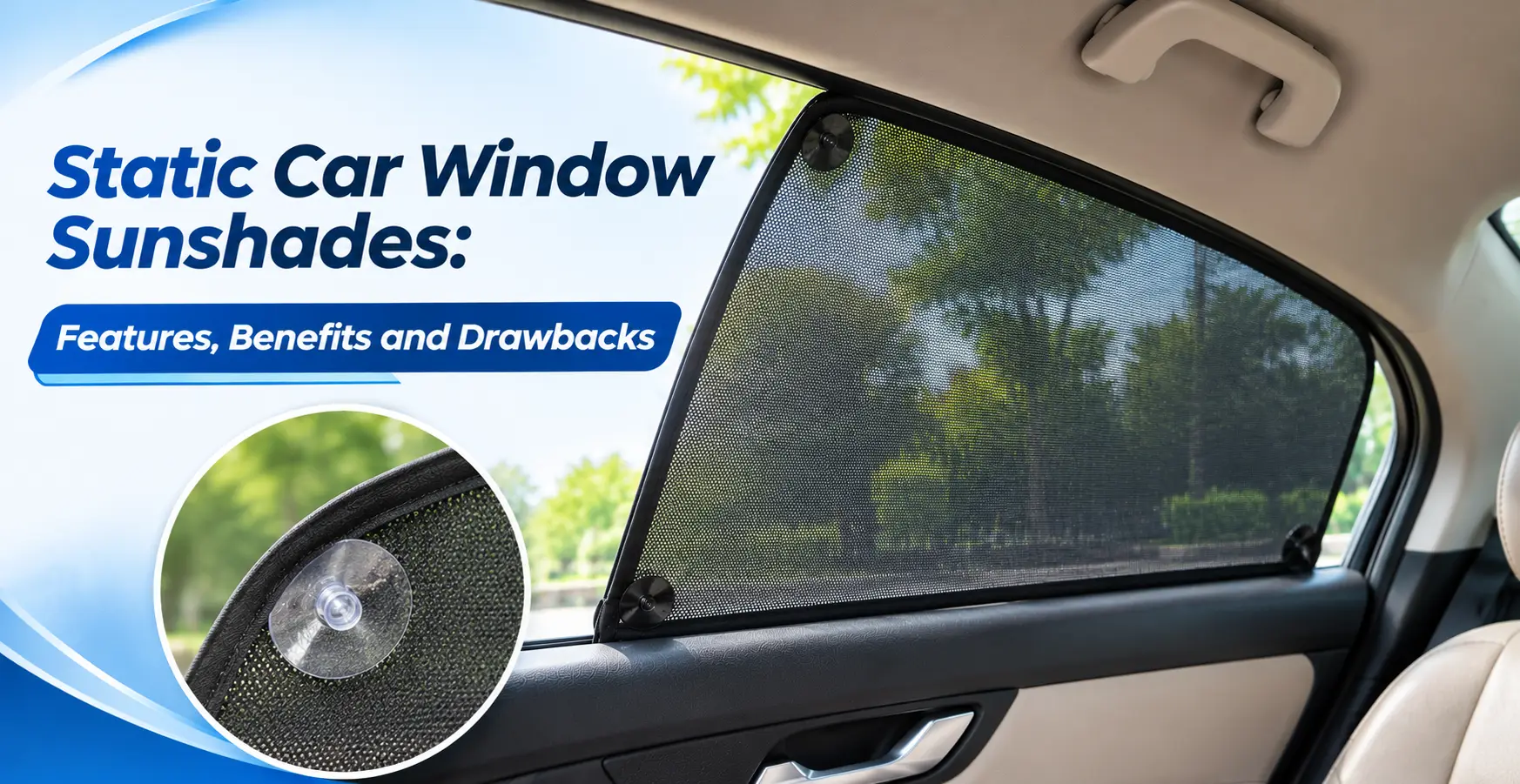
4. Static Car Window Sunshades: Features, Benefits and Drawbacks
Static car window sunshades use a static-cling surface to attach to compatible glass without requiring magnets or a permanent mounting mechanism. They are generally lightweight and designed for temporary use.
Their simple construction makes them an option for people looking for a basic shading accessory. However, their ability to remain attached depends on the condition of the glass, the product material and the surrounding environment.
Features
- Static-cling attachment: Uses a surface designed to cling to compatible glass.
- Lightweight material: Usually made from flexible and lightweight materials.
- Simple installation: Generally does not require a complex mounting mechanism.
- Different sizes: Available in different shapes and dimensions.
Benefits
- Easy application and removal: Can generally be applied and removed without complicated fittings.
- Compact storage: Can be folded or stored when not required.
- Simple construction: Does not rely on a roller or magnetic frame.
- Temporary shading: Can provide shade when correctly fitted to a compatible surface.
Drawbacks
- Adhesion problems: Dust, moisture, heat and repeated use can weaken the attachment.
- Glass compatibility: May not stay attached properly to every glass surface.
- Coverage limitations: Incorrect sizing can leave portions of the window uncovered.
- Regular cleaning: The glass and shade may need cleaning to maintain proper adhesion.
Creckk Fact: Static-cling attachment does not automatically exempt a sunshade from applicable vehicle-glazing regulations in India.
Creckk Tip: Follow the product's installation instructions and check its compatibility before use. Do not assume that an aftermarket shade is legally permitted simply because it can be removed.
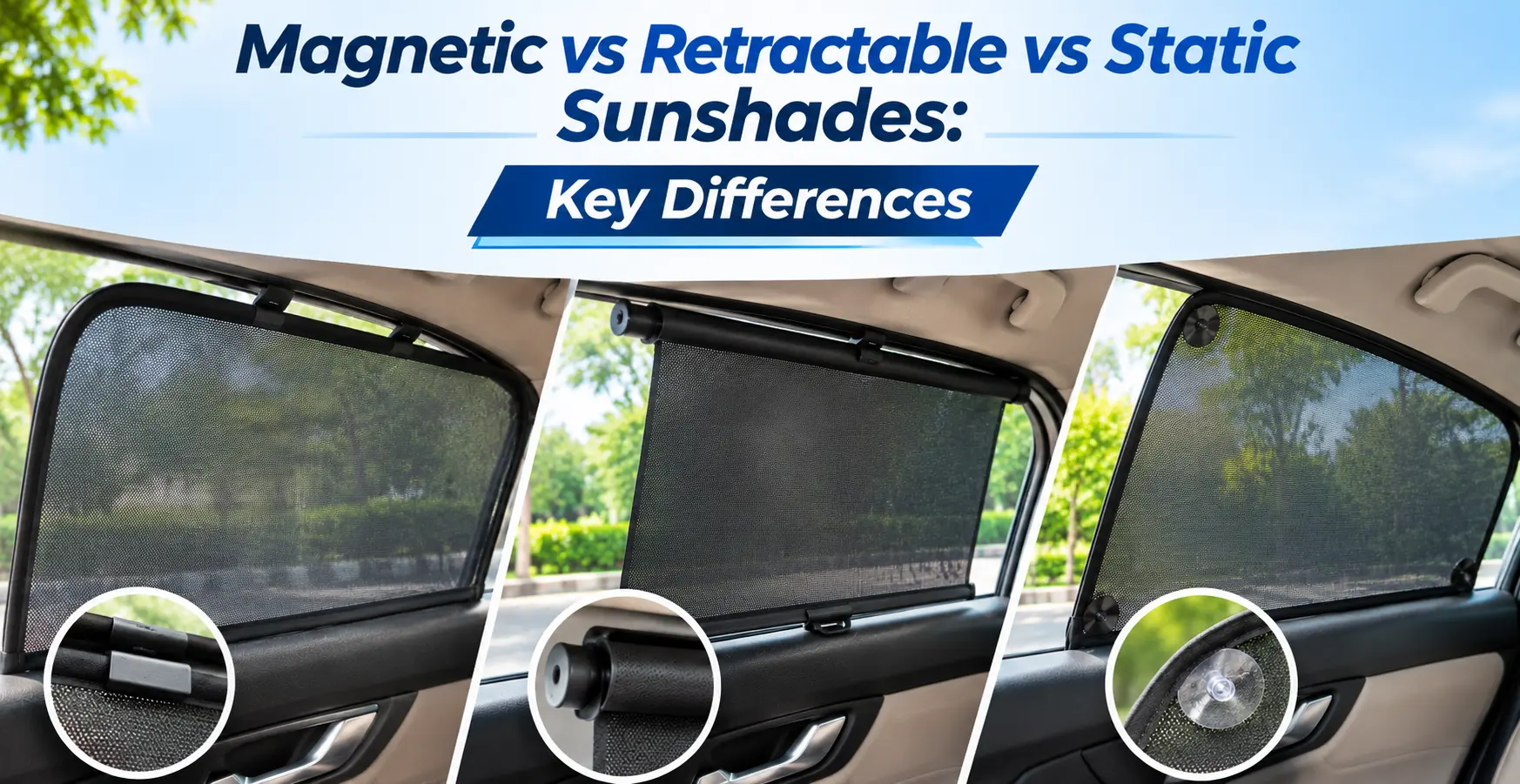
5. Magnetic vs Retractable vs Static Sunshades: Key Differences
Magnetic, retractable and static car window shades serve a similar purpose, but their attachment methods, installation requirements and everyday convenience are different.
Understanding these differences can help you select a product that matches your vehicle's requirements. The most suitable option depends on compatibility, construction, ease of use and whether its intended installation is permitted under applicable regulations.
Comparison of Magnetic, Retractable and Static Sunshades
| Comparison Factor | Magnetic | Retractable | Static |
|---|---|---|---|
| Attachment | Magnets | Roller or mounting mechanism | Static adhesion |
| Installation | Generally simple | Depends on mounting system | Generally simple |
| Removal | Usually easy | Retracts into housing | Usually easy |
| Adjustability | Limited by design | High | Limited |
| Storage | Can be removed and stored | Usually remains mounted | Can be folded or stored |
| Maintenance | Clean magnets and mesh | Maintain roller mechanism | Keep surface clean |
| Compatibility | Requires suitable magnetic contact | Requires suitable mounting space | Requires compatible glass |
| Main Advantage | Convenient installation | Adjustable coverage | Lightweight construction |
| Main Limitation | Vehicle compatibility | Mechanism and installation | Adhesion may weaken |
Which Type Is More Convenient?
The answer depends on how you intend to use the product.
- Magnetic sunshades: May be convenient for users who prefer removable shades and have compatible vehicle frames.
- Retractable sunshades: May suit users who want adjustable coverage without completely removing the accessory.
- Static sunshades: May appeal to users looking for lightweight products with a simple attachment method.
There is no single best car window sunshade for every vehicle. A product that works well for one car may not fit another because window dimensions and frame construction differ.
Creckk Tip: Compare product dimensions, material details and installation requirements before choosing between magnetic, retractable and static car sun shades.

6. Are Car Window Sunshades Legal in India? Understanding CMVR Rule 100, VLT Limits and Supreme Court Regulations
Before purchasing or installing a car window sunshade, Indian car owners should understand the regulations concerning vehicle glass and additional materials placed on it.
Rule 100 of the Central Motor Vehicles Rules, 1989, specifies the minimum Visual Light Transmission (VLT) requirements for vehicle glass. VLT refers to the percentage of visible light that passes through a glass surface.
What Is the VLT Requirement Under CMVR Rule 100?
Under Rule 100(2):
- Windscreen and rear window: The glass must have at least 70% VLT.
- Side windows: The glass must have at least 50% VLT.
These requirements concern the light transmission of vehicle safety glass. The rule also requires the glass to conform to the applicable Indian Standards.
What Did the Supreme Court Say About Black Films?
In Avishek Goenka v. Union of India, the Supreme Court delivered a judgment on 27 April 2012 concerning the use of black films and other materials on vehicle safety glass.
The Court prohibited the use of black films of any VLT percentage or other material upon vehicle safety glass, including windscreens and side windows. It also clarified that the specified VLT requirements relate to the glass itself, rather than glass with additional films or materials applied afterwards.
In a follow-up order dated 3 August 2012, the Supreme Court reiterated its directions and stated that no material, including films of any VLT, should be pasted on vehicle safety glass.
What Does This Mean for Aftermarket Car Window Sunshades?
Car owners should not assume that every removable car window shade is automatically legal simply because it is magnetic, retractable or static.
The Supreme Court's directions specifically address materials placed on vehicle safety glass. Therefore, an aftermarket product attached to or placed against the glass may raise compliance concerns. A removable design does not, by itself, establish an exemption.
Before installing any aftermarket sunshade:
- Understand the applicable vehicle-glazing regulations.
- Avoid applying unauthorised films or materials to vehicle safety glass.
- Ensure that the driver's visibility is not obstructed.
- Check the intended installation method with the relevant traffic authority if uncertain.
Creckk Tip: Check the latest applicable regulations and seek clarification from your local traffic authority before using an aftermarket car window sunshade.

7. How to Choose the Best Car Window Sunshade for Your Vehicle?
Choosing the best car window sunshade involves understanding your vehicle's requirements rather than selecting a product based only on its appearance. A shade that works well for one vehicle may not fit another because window dimensions, frame construction and mounting space can differ.
Consider these factors before purchasing.
1. Check Window Dimensions
Measure the glass area where the product is intended to be used. Compare these measurements with the manufacturer's product dimensions to avoid gaps or incorrect fitting.
2. Understand the Attachment Method
Magnetic shades require suitable magnetic contact points, retractable models need compatible mounting space, and static shades require a suitable surface. Check the manufacturer's fitting instructions before making a decision.
3. Check Material Quality
Look for durable mesh or fabric, secure construction and properly finished edges. If a product claims UV protection, check whether the manufacturer provides reliable test information rather than relying only on marketing descriptions.
4. Consider Visibility
The shade should not obstruct the driver's view or interfere with safe vehicle operation. Visibility is especially important around the windscreen, front side windows and rear-view areas.
5. Check Installation and Maintenance
Understand whether the product requires clips, brackets, magnets or another attachment method. Also check how easily it can be cleaned, removed and stored.
6. Verify Legal Compliance
Do not assume that a product is legal simply because it is marketed as removable or reusable. Check the applicable Indian regulations and the way the product is intended to be installed.
Creckk Tip: When exploring Creckk car accessories, compare product dimensions, material details and compatibility before making a purchase.
Frequently Asked Questions (FAQs)
1. Which type of car window sunshade is best?
The best option depends on your vehicle and requirements. Magnetic shades offer removable attachment, retractable shades provide adjustable coverage, and static shades offer lightweight construction. Always check compatibility and legal requirements.
2. Do car window sunshades reduce cabin temperature?
Car window sunshades can reduce direct sunlight entering through covered windows, which may help improve passenger comfort. However, they do not guarantee a particular reduction in cabin temperature because several other factors affect how hot a vehicle becomes.
3. What is the difference between magnetic and static car window shades?
Magnetic shades use magnets to attach to suitable metal surfaces around the window frame. Static shades use a static-cling surface to attach to compatible glass. Their installation methods and vehicle compatibility requirements are different.
4. Do car window sunshades protect against UV rays?
Some sunshades are designed to block or reduce UV exposure, but their performance varies according to material and construction. Check the manufacturer's verified UV-protection specifications before purchasing.
5. Are retractable car window shades legal in India?
The Supreme Court's directions prohibit pasting films or other materials on vehicle safety glass. A retractable design is not automatically exempt. Check the product's intended installation and seek clarification from the relevant traffic authority before use.
6. Can I use a sunshade on my car's rear window?
Rear-window shades are available, but their installation must comply with applicable vehicle-glazing requirements and must not compromise safe visibility. Check the relevant rules and product instructions before use.
7. What should I check before buying a car window sunshade?
Check the product dimensions, material quality, attachment method, vehicle compatibility, visibility impact and applicable legal requirements. These factors help you avoid purchasing a shade that does not suit your vehicle.
Conclusion
A car window sunshade can be a useful accessory for reducing direct sunlight and improving passenger comfort. However, magnetic, retractable and static designs offer different features and installation methods.
Magnetic shades are designed for removable attachment, retractable shades offer adjustable coverage, and static shades provide lightweight construction. Each option has its own features, benefits and drawbacks, so the right choice depends on your vehicle's compatibility and requirements.
Before purchasing, always check the product dimensions, material quality and attachment method. Most importantly, understand the Indian regulations concerning additional materials on vehicle safety glass. Exploring Creckk car accessories with these considerations in mind can help you make a more informed decision.
Editorial note: The legal section summarises CMVR Rule 100 and the cited Supreme Court decisions. It is informational, not legal advice. Check current requirements and obtain clarification from the relevant authority before installing aftermarket shades.