




































































































































































































































Car insurance add-ons are optional covers that extend the protection offered by your existing policy. Depending on the insurer and policy conditions, they can help cover expenses related to depreciation, engine damage, roadside emergencies, tyre damage and other specific situations. Choosing the right options during car insurance renewal can make your policy more suitable for your vehicle, driving habits and location.
However, buying every available add-on is not always necessary. The right choice depends on your car's age, usage, value and the risks you are more likely to face. For example, a new car owner may benefit from zero depreciation and return to invoice cover, while someone who frequently travels long distances may find roadside assistance useful.
In this guide, we explore seven car insurance add-ons worth buying, their benefits, limitations and important points to consider before renewing your policy.
1. What Are Car Insurance Add-Ons and Why Do You Need Them?
Car insurance add-ons are optional benefits that can be purchased along with an eligible motor insurance policy to provide additional financial protection. They are designed to cover specific expenses or situations that may not be fully included in a standard comprehensive policy. Each add-on serves a different purpose, allowing car owners to customise their insurance according to their requirements.
A comprehensive car insurance policy generally covers accidental damage to your insured vehicle, theft and certain natural or man-made events, along with third-party liability. However, expenses such as depreciation deductions, certain engine repairs, consumable materials and emergency roadside services may not be covered unless the relevant protection is included.
For example, if your car is damaged in an accident, the insurer may deduct depreciation on replaced parts when calculating the claim. Similarly, engine damage caused by water entering the engine may fall outside the standard policy's coverage, depending on the circumstances and policy wording. Suitable add-ons can help address these coverage gaps.
The main advantage of selecting the best car insurance add-ons in India is that you can pay for additional protection that matches your actual needs rather than choosing unnecessary benefits.
Creckk Tip: Before purchasing an add-on, compare its premium, coverage limits, exclusions and claim conditions. A lower premium does not always mean better protection.
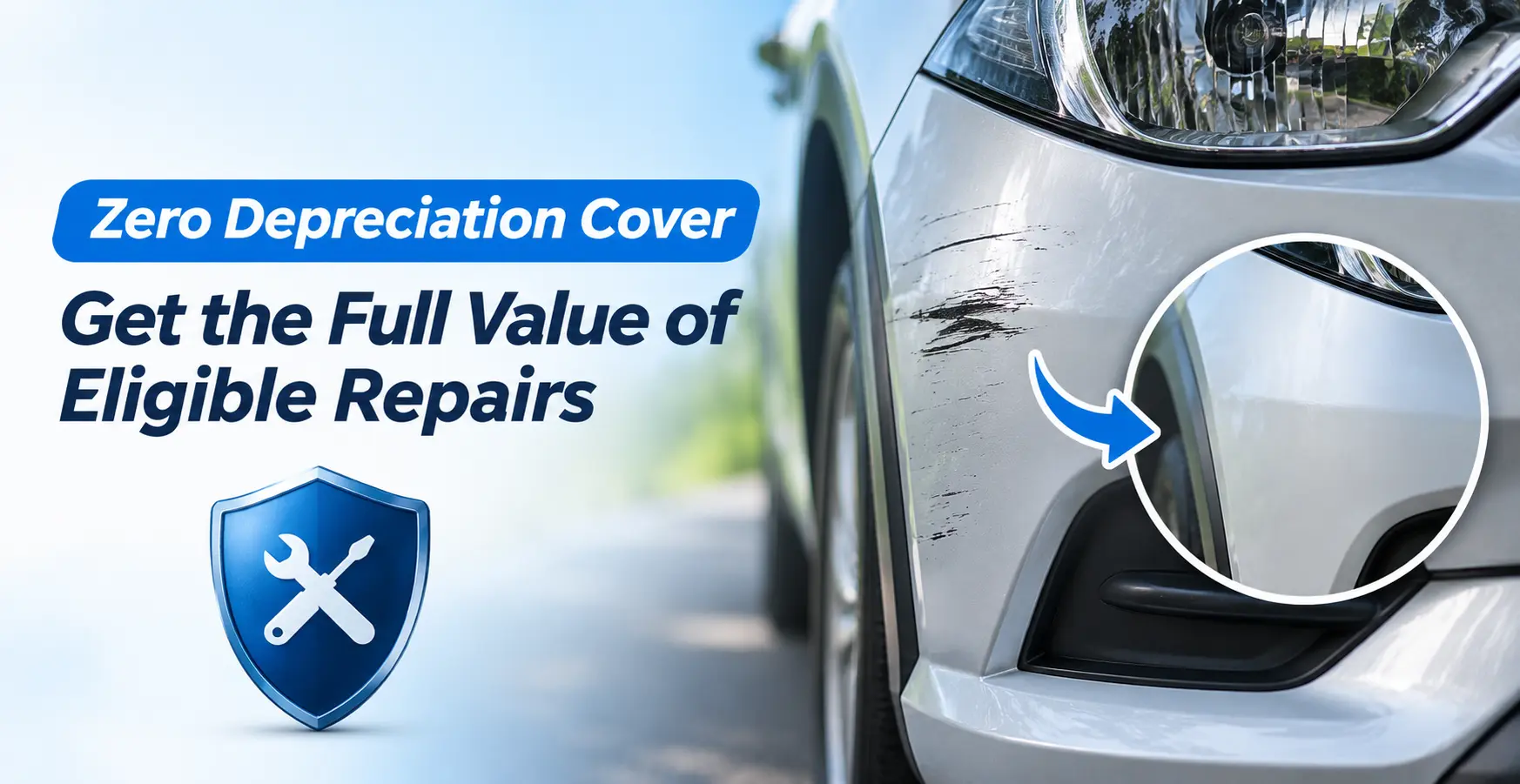
2. Zero Depreciation Cover: Get the Full Value of Eligible Repairs
Zero depreciation car insurance, also known as bumper-to-bumper insurance, is one of the most popular add-ons available to car owners. It reduces the depreciation deduction applied to eligible replaced parts when settling an approved own-damage claim. This means the policyholder may receive a higher claim amount compared with a standard policy that applies depreciation to those parts.
During regular vehicle use, components such as plastic, rubber, fibre and metal parts lose value over time. When these components need replacement after an accident, the insurer may deduct depreciation according to the applicable policy terms. A zero depreciation add-on helps reduce this deduction for covered parts, lowering the repair expenses paid by the car owner.
This cover is particularly useful for people purchasing a new car or owning a relatively new vehicle. It can also be beneficial for expensive cars where replacement parts may cost considerably more. However, insurers may impose vehicle-age restrictions, claim limits, deductibles and exclusions. Certain components, consumables and mechanical failures may not be covered.
Creckk Fact: Zero depreciation cover does not mean every repair is completely free. Deductibles, excluded items and expenses outside the policy conditions may still need to be paid by the policyholder.
Creckk Tip: Consider zero depreciation cover if your car is relatively new and you want to reduce depreciation-related deductions during eligible accident repairs.
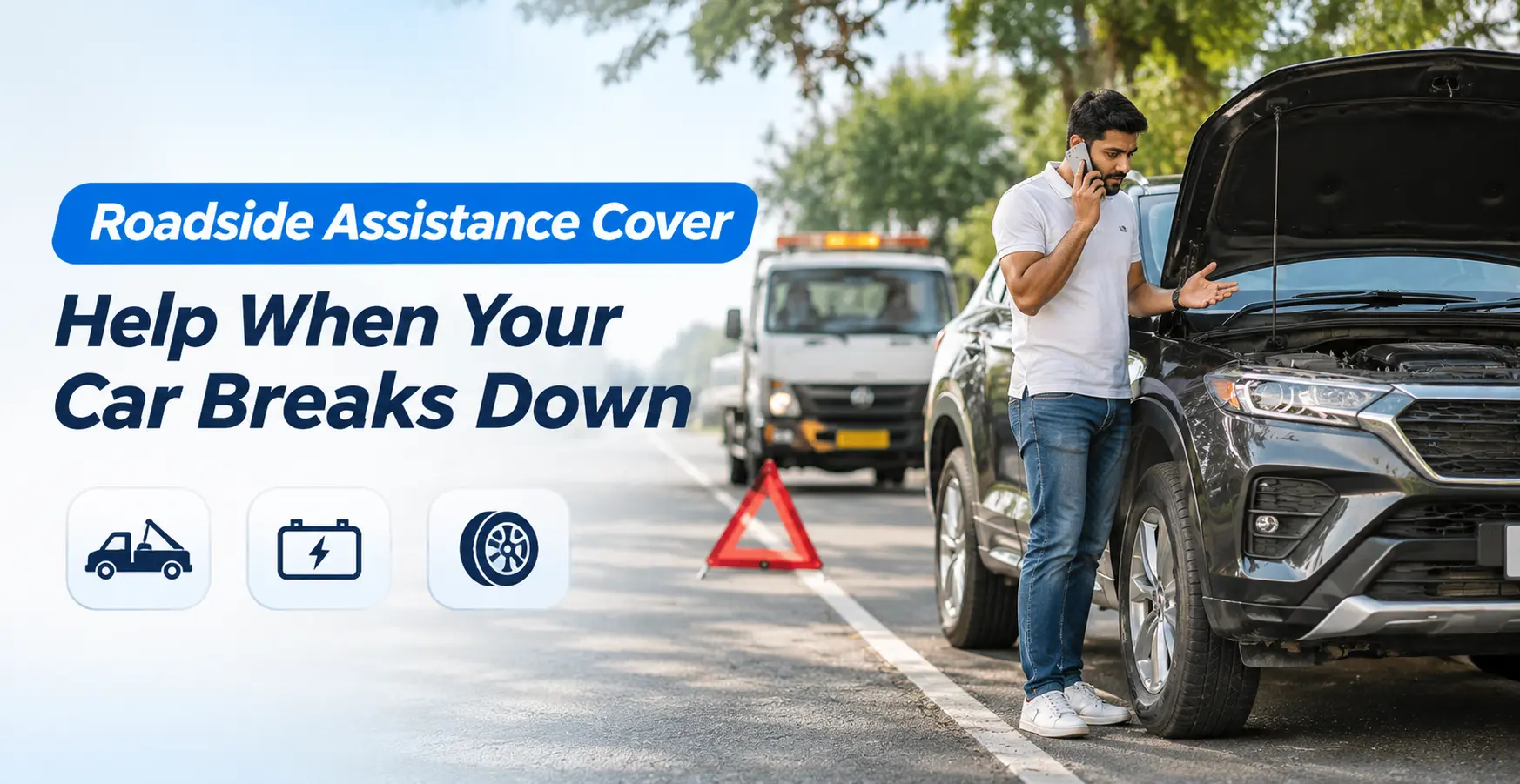
3. Roadside Assistance Cover: Help When Your Car Breaks Down
A vehicle breakdown can happen unexpectedly, whether you are driving through city traffic or travelling on a highway. A flat tyre, discharged battery, engine trouble or empty fuel tank can interrupt your journey and create unnecessary inconvenience. Roadside assistance cover provides access to emergency support when your vehicle becomes immobilised or faces certain mechanical problems.
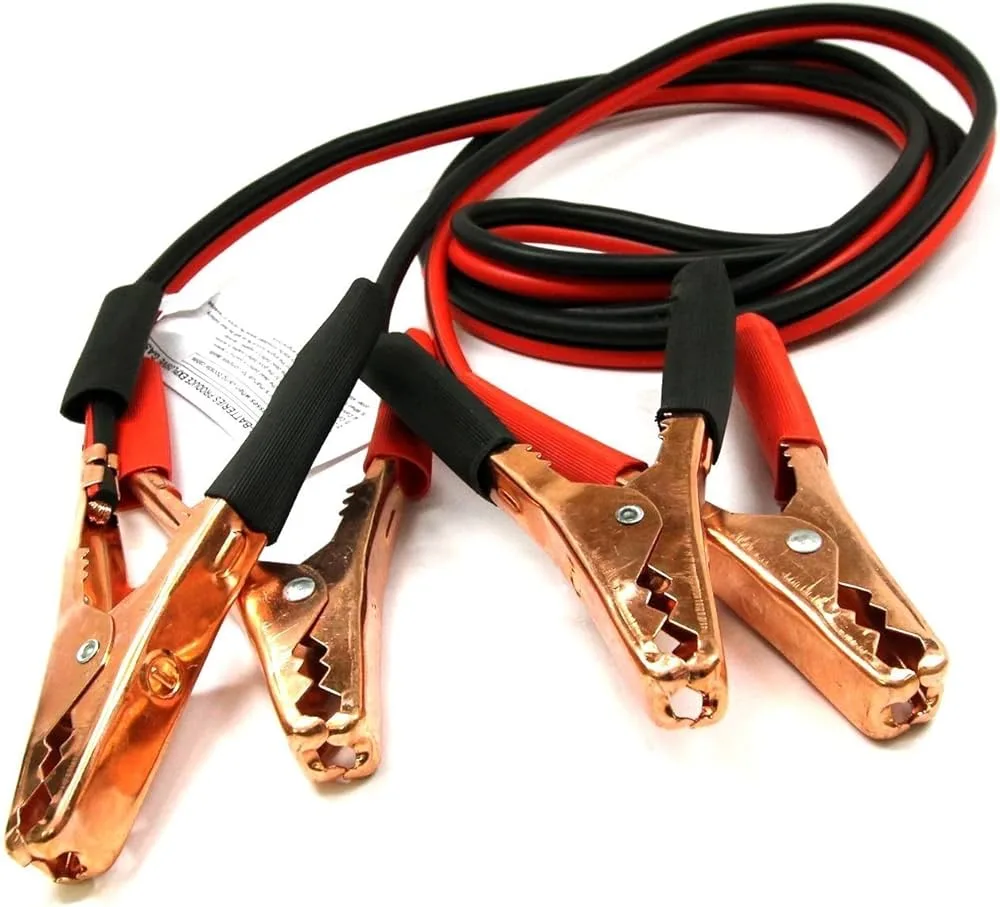
Depending on the insurer and selected package, roadside assistance in car insurance may include towing services, battery jump-starts, flat-tyre assistance, emergency fuel delivery, minor on-site repairs and help with arranging alternative transportation. Some insurers also provide support for lost keys or other emergencies under specific conditions.
This add-on can be particularly useful for people who frequently travel long distances, drive in unfamiliar locations or use their vehicles regularly for work. It can save time by connecting drivers with authorised assistance providers instead of requiring them to arrange help independently.
However, roadside assistance is not necessarily unlimited. Insurers may specify the number of service requests, towing distance, geographical availability and additional charges for certain services. It is also important to understand whether the assistance is available 24 hours a day and whether it covers your regular travel routes.
Creckk Tip: Before selecting this add-on, check the towing distance, service locations, emergency response process and number of free assistance requests included in the policy.
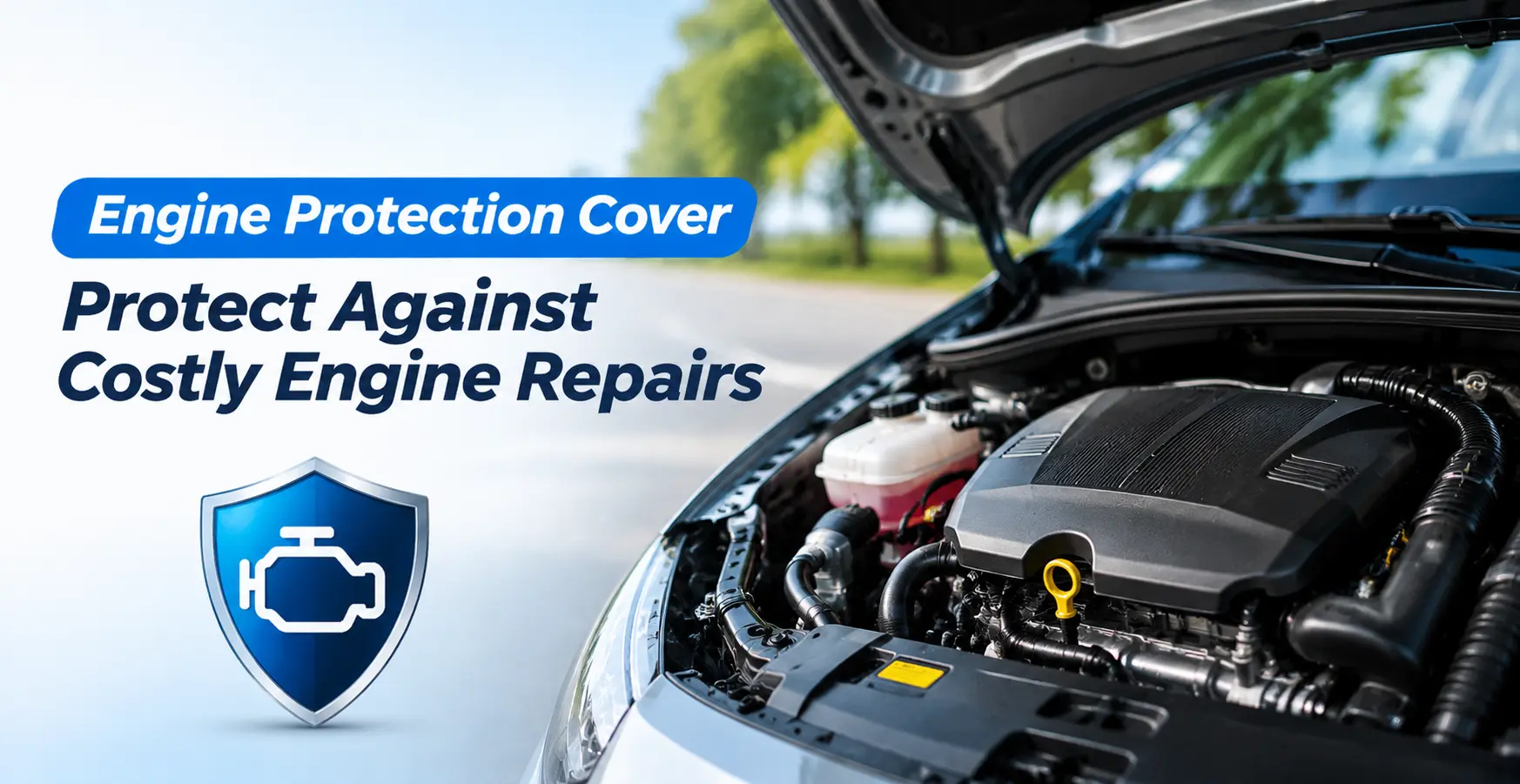
4. Engine Protection Cover: Protect Against Costly Engine Repairs
The engine is one of the most important and expensive components of a car. Damage to it can result in significant repair expenses, particularly when the problem involves internal engine components. Engine protection cover is an optional insurance add-on designed to provide financial protection against specified engine-related damage that may not be covered under a standard comprehensive policy.
One important example is water ingression. During heavy rainfall or flooding, water can enter the engine through the air intake or other openings. Attempting to start a waterlogged engine can cause severe internal damage, commonly known as hydrolock. Engine protection cover may help pay for eligible repairs resulting from such incidents, subject to the policy conditions.
Some policies also cover specified damage associated with lubricating oil leakage. This can be valuable during monsoons, especially for people living in areas that experience waterlogging or frequently driving through roads with accumulated rainwater.
However, engine protection does not cover every mechanical problem. Normal wear and tear, gradual deterioration, manufacturing defects and damage caused by negligence may be excluded. Coverage for oil leakage and other engine-related events also varies between insurers.
Creckk Fact: Starting a car after it has been submerged in water can increase the risk of serious engine damage. Avoid attempting to restart it and contact professional assistance.
Creckk Tip: If you live in a flood-prone area or regularly drive through waterlogged roads, compare engine protection options before completing your car insurance renewal.
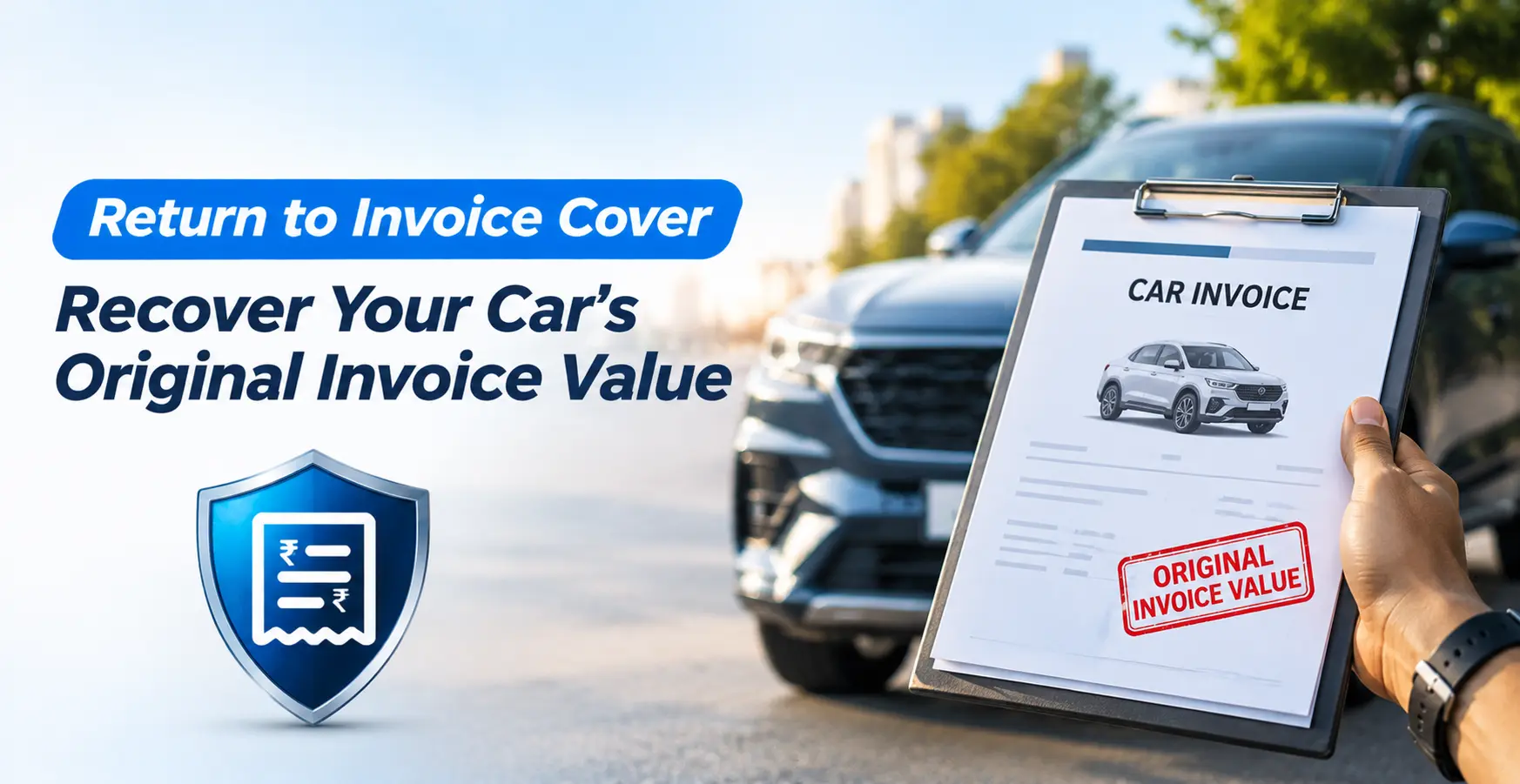
5. Return to Invoice Cover: Recover Your Car's Original Invoice Value
Buying a new car is a significant financial investment. However, its market value generally decreases over time because of depreciation. If the vehicle is stolen or suffers damage beyond economical repair, the standard insurance settlement is generally based on its Insured Declared Value (IDV) rather than its original purchase price. This is where return to invoice insurance can provide additional financial protection.
Return to Invoice (RTI) is an optional add-on that can help bridge the difference between the vehicle's IDV and its original on-road invoice value in eligible total-loss or theft claims. Depending on the policy, the settlement may also account for certain registration and road tax components.
For example, imagine that a car was originally purchased for ₹12 lakh, but its IDV has reduced to ₹9 lakh. If the vehicle is stolen and the claim qualifies under the RTI cover, the add-on may help cover the eligible difference of ₹3 lakh, subject to policy terms and the settlement calculation.
This cover is generally more relevant for new or relatively new cars because their original invoice value and current IDV may differ significantly over time. Insurers commonly apply vehicle-age limits and specific eligibility conditions.
Creckk Fact: RTI is not a guaranteed full refund for every accident. It generally applies to qualifying theft or total-loss situations, not ordinary repairable damage.
Creckk Tip: Compare the RTI premium with your car's current IDV and check the vehicle-age eligibility before purchasing this add-on.
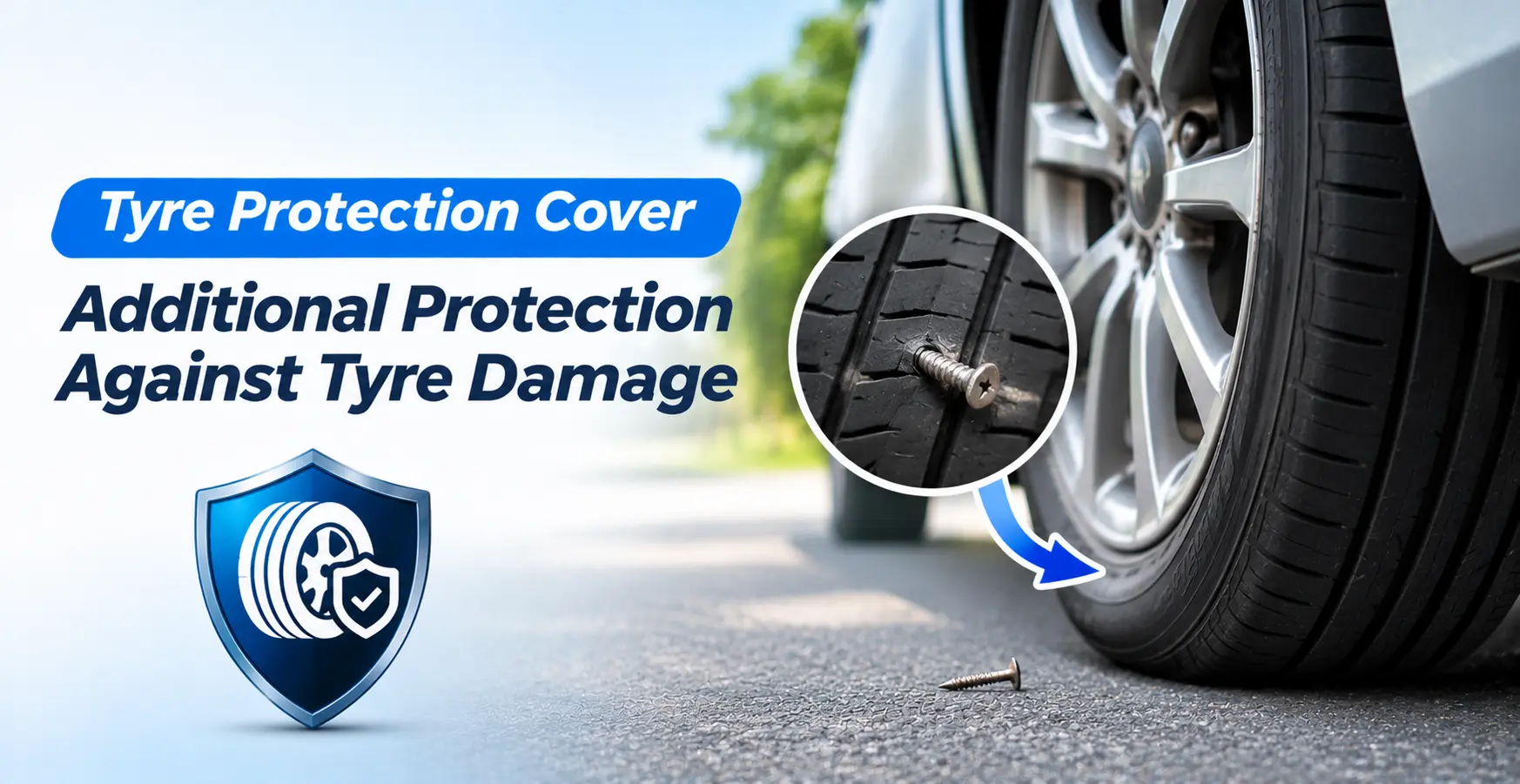
6. Tyre Protection Cover: Additional Protection Against Tyre Damage
Car tyres are constantly exposed to road conditions, sharp objects, potholes and unexpected obstacles. Even when a vehicle is regularly maintained, accidental tyre damage can happen during everyday driving. Tyre protection cover is an optional insurance add-on that can help cover specified tyre-related expenses that may not be included in a standard motor insurance policy.
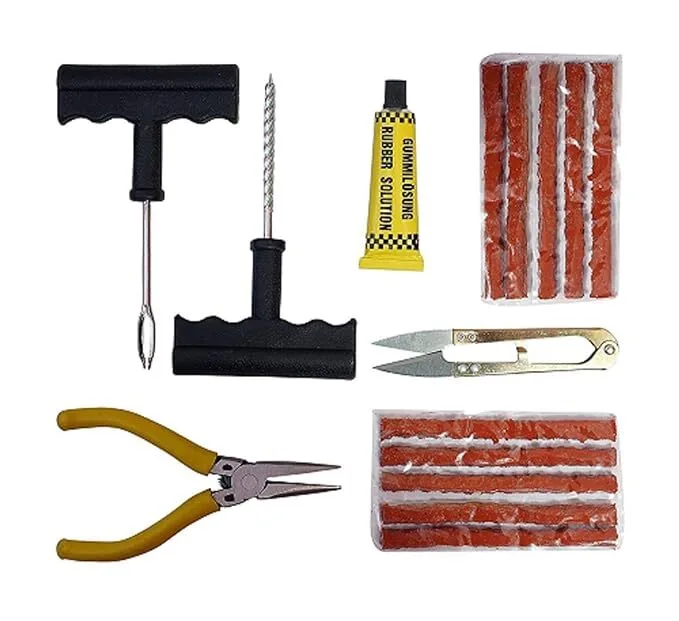
Depending on the insurer, this add-on may cover accidental tyre damage such as cuts, bursts, bulges and certain forms of sidewall damage. Some policies may also provide benefits towards tyre repair, replacement or related labour expenses when the damage meets the specified conditions.
This protection can be useful for people who frequently travel on highways, drive through poorly maintained roads or use their cars extensively. Replacing damaged tyres, particularly premium or specialised tyres, can become an additional expense for vehicle owners.
However, tyre protection is not the same as a general tyre maintenance plan. Normal wear and tear, gradual tread reduction, ageing, improper inflation and damage caused by continued use of an already damaged tyre may be excluded. Insurers may also specify minimum tread depth, claim limits and replacement conditions.
Creckk Tip: Check whether the policy covers both tyre repair and replacement, the maximum claim amount and any restrictions on the number of tyres covered.
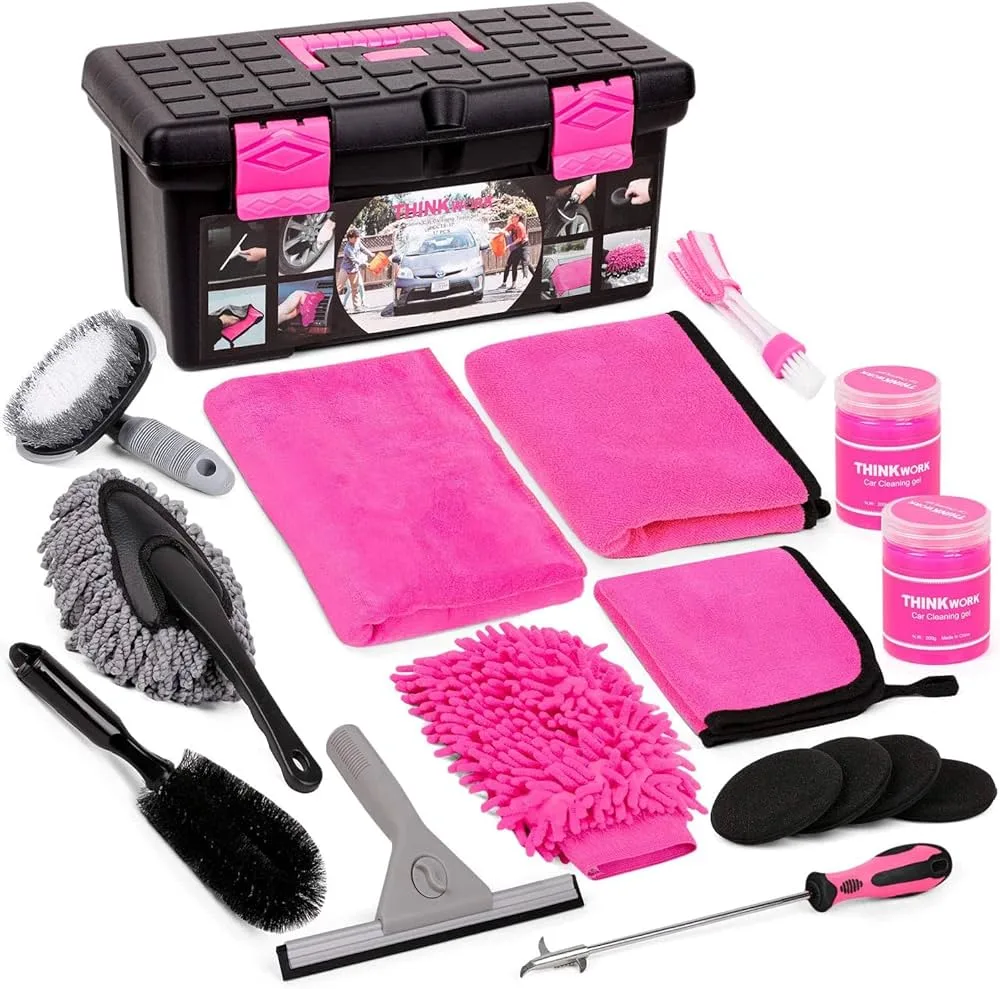
Regularly inspecting tyre pressure, tread depth and visible damage is equally important. Along with suitable insurance protection, car owners can explore relevant Creckk car accessories and vehicle maintenance products to support everyday vehicle care.
7. Consumables and NCB Protection: Two More Add-Ons Worth Considering
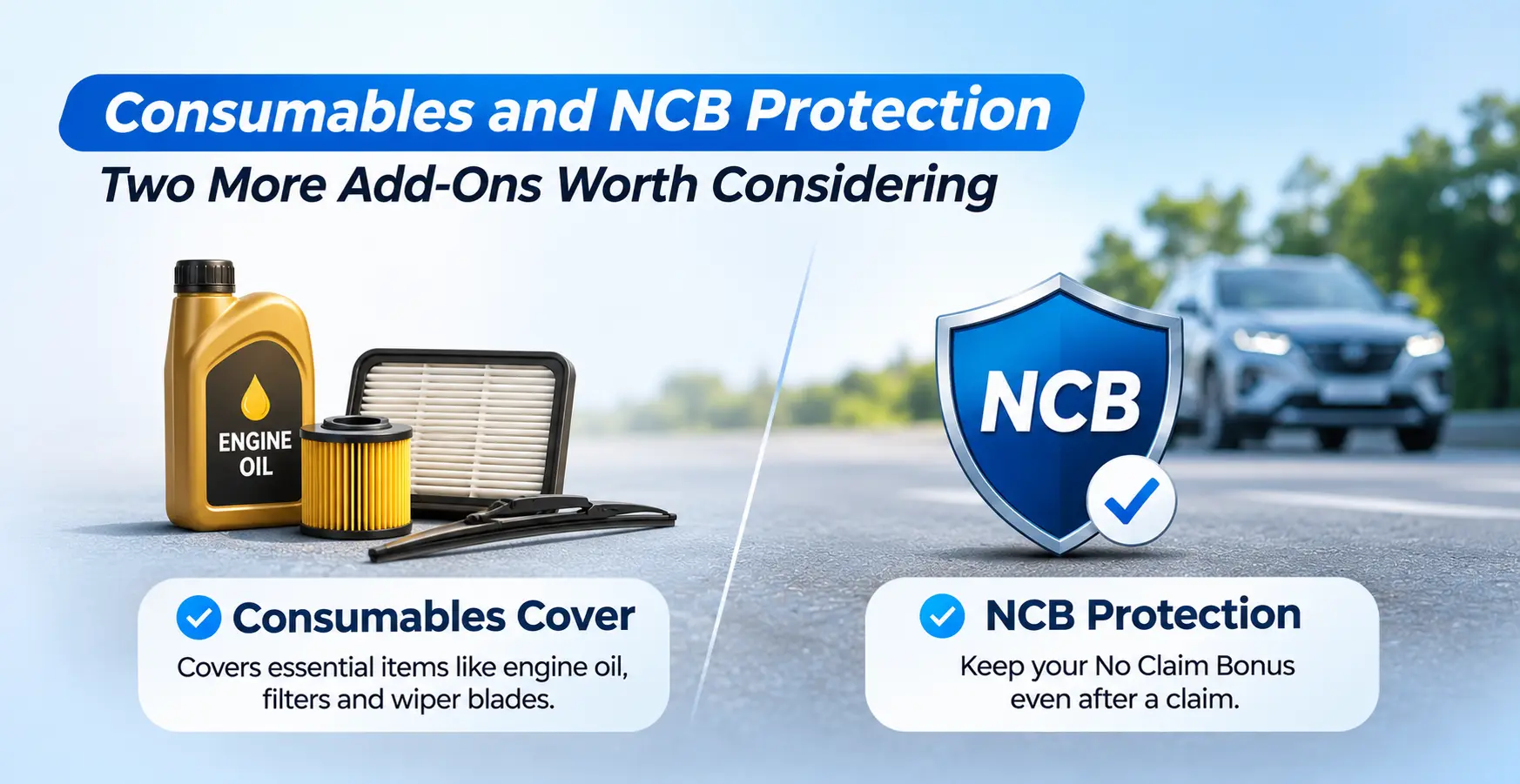
Apart from the five major covers discussed above, consumables protection and No Claim Bonus protection are two additional options worth considering during car insurance renewal. Both serve different purposes and can help reduce certain expenses associated with eligible insurance claims.
Consumables Cover in Car Insurance
Consumables cover in car insurance helps pay for eligible consumable items used during covered vehicle repairs. These may include engine oil, lubricants, nuts, bolts, screws, washers and other specified materials that are generally not covered under a standard policy.
Although individual consumable items may appear inexpensive, their combined cost during a major repair can increase the final workshop bill. This add-on can help reduce these additional expenses when the claim meets the policy requirements.
NCB Protection in Car Insurance
No Claim Bonus (NCB) is a reward offered to eligible policyholders for not making an own-damage claim during the relevant policy period. It generally provides a discount on the own-damage portion of the renewal premium.
NCB protection in car insurance is an optional add-on that can help preserve the accumulated bonus after a permitted claim, subject to the insurer's conditions and claim limits. This can be useful for drivers who have maintained a good claim history over several years.
Creckk Fact: NCB protection does not remove every restriction associated with bonus eligibility. The number of permitted claims and other conditions depend on the selected policy.
Creckk Tip: If you have accumulated a significant NCB discount, compare the cost of NCB protection with the potential renewal savings before deciding.
8. How to Choose the Right Car Insurance Add-Ons Before Renewal
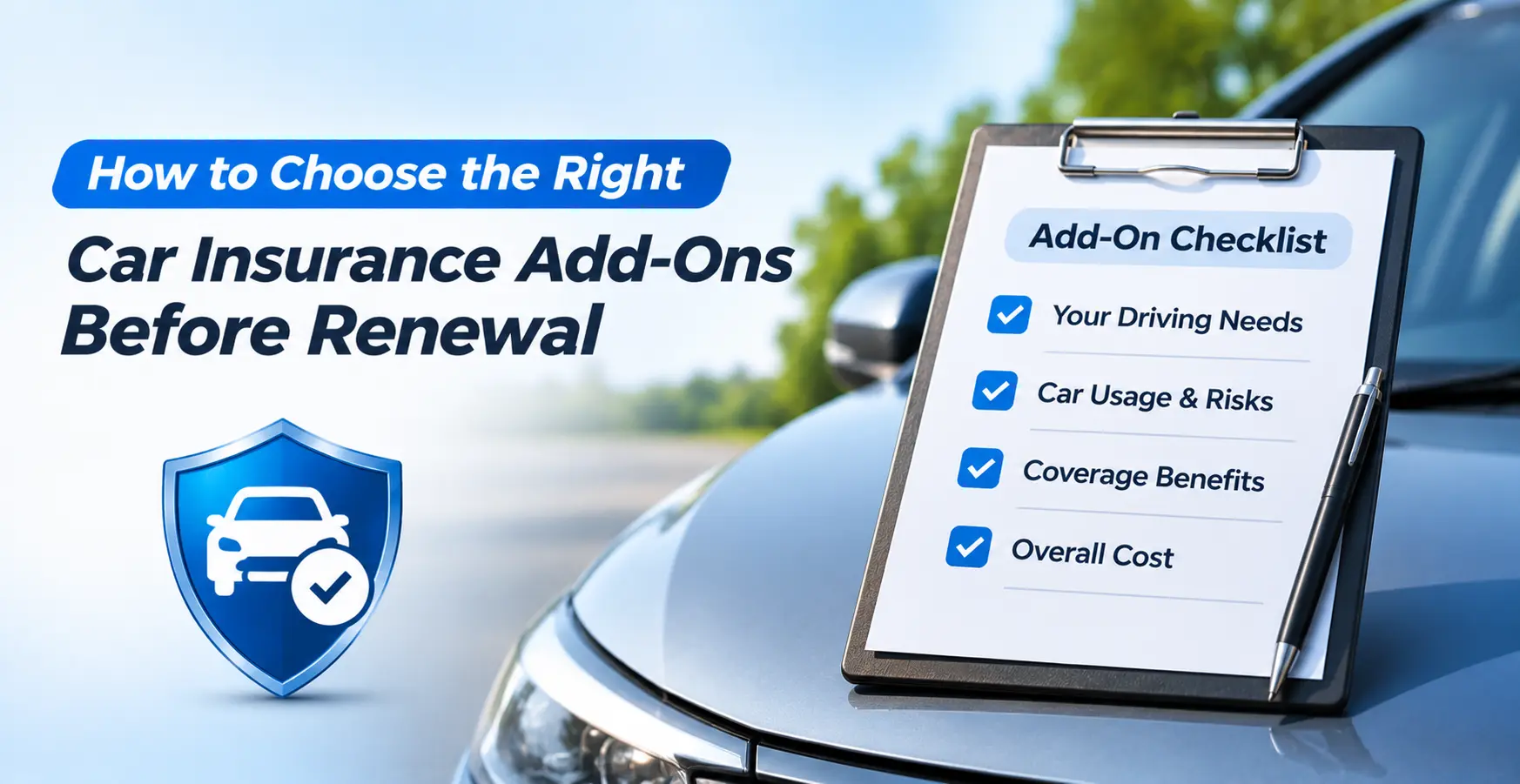
Selecting the right car insurance add-ons is not about purchasing every available option. It is about understanding your vehicle's requirements and choosing protection that offers genuine value. Before completing your car insurance renewal, evaluate your driving habits, vehicle condition and the risks you may encounter.
Start by considering your car's age and current market value. Owners of new vehicles may benefit from zero depreciation and return to invoice cover, while older vehicles may have different eligibility restrictions. Next, consider how frequently you drive. If you regularly travel long distances, roadside assistance can be useful. If you live in an area that experiences heavy rainfall or flooding, engine protection may deserve attention.
You should also compare the additional premium against the potential benefits. Read the policy wording carefully and check deductibles, claim limits, exclusions, waiting periods and geographical restrictions. Some benefits may already be included in your existing policy, so avoid paying twice for similar coverage.
Car Insurance Add-On Comparison
| Car Owner's Requirement | Add-On Worth Considering | Main Benefit |
|---|---|---|
| New or relatively new car | Zero depreciation | Reduces depreciation deductions |
| Frequent highway travel | Roadside assistance | Emergency breakdown support |
| Flood-prone location | Engine protection | Protection against specified engine damage |
| New vehicle with high purchase value | Return to invoice | Helps bridge IDV and invoice value |
| Frequent driving on rough roads | Tyre protection | Covers specified accidental tyre damage |
| Concern about repair expenses | Consumables cover | Covers eligible repair consumables |
| Accumulated NCB discount | NCB protection | Helps preserve eligible NCB |
Creckk Tip: Compare at least two or three insurance quotes before renewing. Choose add-ons based on actual requirements, not simply because they are available.
Frequently Asked Questions (FAQs)
1. What are car insurance add-ons?
Car insurance add-ons are optional covers that extend the benefits of an existing eligible insurance policy. They provide additional protection against specific expenses, such as depreciation deductions, engine damage, tyre damage and roadside emergencies.
2. Which car insurance add-ons are worth buying in India?
Some useful options include zero depreciation, roadside assistance, engine protection, return to invoice, tyre protection, consumables cover and NCB protection. The right combination depends on your vehicle's age, location, usage and insurance requirements.
3. Is zero depreciation car insurance worth it?
Yes, zero depreciation cover can be beneficial, particularly for new and relatively new cars. It reduces depreciation deductions on eligible replaced parts during approved claims, helping lower the policyholder's repair expenses.
4. Is engine protection cover necessary during the monsoon?
Engine protection can be useful during the monsoon, particularly in flood-prone areas. It may cover specified engine damage caused by water ingression or oil leakage, depending on the insurer's policy conditions.
5. What is the difference between IDV and return to invoice cover?
IDV represents the insured declared value of the vehicle, while return to invoice cover helps bridge the difference between IDV and the original invoice value in eligible theft or total-loss situations.
6. Does roadside assistance cover towing and flat tyres?
Many roadside assistance packages include towing, flat-tyre assistance, battery jump-starts and emergency fuel delivery. However, available services, distance limits and additional charges depend on the selected insurance policy.
7. Can I add insurance add-ons during policy renewal?
Yes, eligible add-ons can generally be selected when renewing an insurance policy. Their availability depends on the insurer, vehicle eligibility and policy requirements. Always review the coverage before completing the renewal.
Conclusion
Choosing the right car insurance add-ons can make a meaningful difference when unexpected vehicle expenses arise. While comprehensive insurance provides important financial protection, additional covers such as zero depreciation, roadside assistance, engine protection, return to invoice and tyre protection can address specific coverage gaps.
Other options, including consumables cover and NCB protection, may also provide value depending on your driving habits and claim history. However, not every car owner needs every add-on. The best approach is to evaluate your vehicle's age, location, usage and potential risks before making a decision.
During your next car insurance renewal, compare different policies, understand their exclusions and select benefits that genuinely suit your requirements. Alongside insurance, maintaining your vehicle with suitable Creckk car accessories and quality online car accessories can support everyday vehicle care.
Make informed decisions, prioritise the protection your car needs and choose insurance coverage that offers the right balance between cost and benefits.